

The escalation of the military conflict between Iran and Israel has triggered significant disruptions in global markets, including for the manufacturing sector, which faces the risk of rising production costs, higher logistics costs and weakening export demand. As the country with the fourth-largest population in the world and the largest economy in Southeast Asia, Indonesia is highly vulnerable to fluctuations in global energy and food prices and disruptions in raw material supply chains.
The direct impact of the Iran–Israel conflict is most visible in the energy market, where the Middle East's role as a major oil producer, accounting for almost 30% of global production, has made markets wary. Disruption to Iran's energy production, which reaches 3.2 million barrels per day, would cause supply disruptions and price fluctuations in international energy markets. Brent oil prices have fluctuated between $73 and $92 per barrel since the Iran–Israel war, with analysts warning of a potential 15–20% increase in 2025. Global energy price volatility has also risen with the threat of closing the Strait of Hormuz, the lifeline of world energy supply routes.
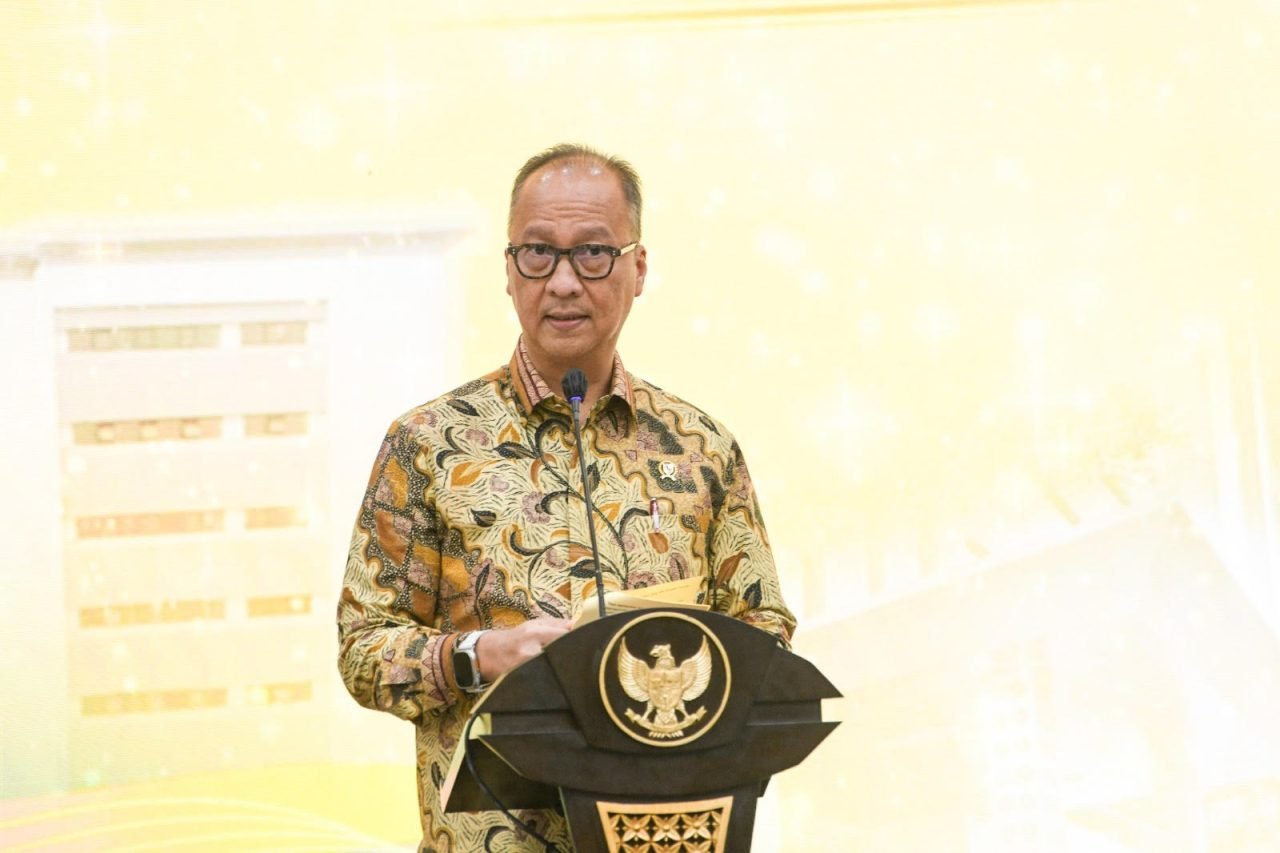
Minister of Industry Agus Gumiwang Kartasasmita stressed the importance of mitigating the risk of the Iran–Israel war's impact on industry, especially domestic industry's dependence on imported energy as raw materials and production input components. Mitigation is also needed to anticipate disruptions in global supply chains, especially industrial raw material supply chains, because logistics routes for raw materials and industrial export products pass through the Middle East, which is currently in open conflict. In addition, the Minister reminded the manufacturing industry to mitigate the impact of the Iran–Israel war on currency exchange rate fluctuations, which cause inflation in the prices of production inputs and reduce the export competitiveness of industrial products.
According to the Minister, energy is vital for industry, not only as a source of production energy, but also as a raw material in the production process. “Domestic industry is therefore asked to be more efficient in its use of energy in production. More efficient use of energy from various sources can increase the productivity and competitiveness of industrial products. This also supports national energy sovereignty as declared by President Prabowo,” he stressed in an official statement in Jakarta on Tuesday (17/6).
Furthermore, Kemenperin encourages industry players not only to use energy efficiently, but also to diversify the energy sources used in production. This is crucial given that dependence on imported fossil energy, especially from the Middle East, is increasingly risky amid prolonged geopolitical conflict.
“National industry must start relying on domestic energy sources, including new and renewable energy such as bioenergy and geothermal, and use industrial waste as alternative fuel,” Agus added.
Kemenperin is even encouraging the manufacturing sector to produce products that support the national energy security program, such as generating machinery, energy infrastructure and renewable energy support components.
In the food sector, Agus also highlighted the urgency of agro-product downstreaming as a strategic response to the indirect impact of the Iran–Israel war on the global economy. The conflict has caused international logistics costs to soar, driven global inflation and triggered US dollar exchange rate fluctuations against developing country currencies, including Indonesia's.
“These three factors — logistics, inflation and exchange rates — directly raise the prices of imported raw materials and food products. The answer is therefore downstreaming of domestic food products. Our industry must take a role in processing domestic agricultural, plantation, fishery and forestry produce so that we do not continue to depend on imported food raw materials,” the Minister of Industry explained.
Agus stressed that the national manufacturing industry will not only focus on agro-sector downstreaming to produce food products, but will also be directed to actively innovate in finding more efficient food production technologies, creating higher added value at home. Agro-product downstreaming to achieve food security and sovereignty is also a priority program of President Prabowo Subianto's government, and the manufacturing industry must contribute to achieving that goal.
The Minister of Industry also urged domestic industry to make use of the LCS (Local Currency Settlement) facility to deal with inflation in production inputs. Industry can use this BI (Bank Indonesia) facility to anticipate the impact of the Iran–Israel war on rupiah exchange rate fluctuations against foreign currencies, especially those of countries that have signed LCS agreements with Indonesia.
Global supply chains
The crisis has also exposed vulnerabilities in global supply chains, especially for Indonesia's manufacturing industry. Critical maritime trade routes—including the Strait of Hormuz, which handles 30% of global oil shipments, and the Suez Canal, the route for 10% of world trade—are at risk of disruption. Recent attacks on commercial vessels have forced rerouting via the Cape of Good Hope in Africa, adding 10–15 days to Asia–Europe shipping times and raising container costs by 150–200%.
These disruptions affect a number of industrial sectors in Indonesia. For example, the automotive and electronics sectors, which depend on imported components for 65% of their production, face semiconductor shortages with lead times of up to 26 weeks—potentially causing export losses of $500 million.
Furthermore, the textile and footwear industry, one of the main export earners, has seen profit margins shrink by 5–7% due to rising logistics costs, reducing its competitiveness against regional rivals such as Vietnam and Bangladesh. Meanwhile, Indonesia's nickel and steel sectors, which are important to the global energy transition, face a 15–20% increase in coal transport costs and shipping delays of three to four weeks, threatening export losses of $1.2 billion.
The conflict is also accelerating worrying global trade trends, including “friend-shoring” by Western economies seeking to reduce their dependence on conflict-prone regions. Although Indonesia stands to benefit from its large nickel reserves—accounting for 40% of global demand for electric vehicle batteries—the country must also face trade barriers such as the European Union's Carbon Border Adjustment Mechanism (CBAM), which could raise exporters' compliance costs by 8–12%.
Food security is also a concern. Indonesia imports fertilizer and NPK-based fertilizer raw materials such as phosphate, an estimated 64% of which comes from Egypt, strategically located in the Middle East region. Besides Egypt, Indonesia also imports small amounts of fertilizer raw materials from other Middle Eastern countries. Although import volumes from these countries are relatively small, the potential impact remains significant if conflict breaks out in the region.
Kemenperin also sees the Middle East conflict as a strategic moment to strengthen downstreaming and the self-reliance of domestic industry. “Amid global challenges, space is actually opening up for Indonesia to reduce its dependence on foreign raw materials and energy and food products. Downstreaming is not only about economic added value, but also about Indonesia's energy and food sovereignty,” Agus stressed.
According to him, government support will continue to be provided in the form of incentives, investment facilitation and fiscal policies to accelerate industrial transformation toward greater efficiency and high competitiveness.
“Food and energy security are not only the responsibility of the primary sector, but also of the industrial sector. And Indonesia's manufacturing industry must be at the forefront of achieving them,” he stressed. With this strategy, Kemenperin hopes Indonesia can maintain the stability of the industrial sector and the economy as a whole, while increasing national resilience in the face of various global pressures.
Source: Press Release of the Ministry of Industry of the Republic of Indonesia