

The Ministry of Industry has set out a new direction for national industrial policy with the launch of the New National Industrialization Strategy (SBIN), a strategic framework for long-term industrial development toward Golden Indonesia 2045. The strategy is the main guide for carrying out President Prabowo Subianto's vision set out in the Asta Cita, placing the industrial sector as the backbone of economic self-reliance and public welfare.
SBIN is a response to rapid global change that is full of uncertainty and disruption. The COVID-19 pandemic, trade wars, geopolitical tensions and the global energy transition have fundamentally changed the world's industrial map.
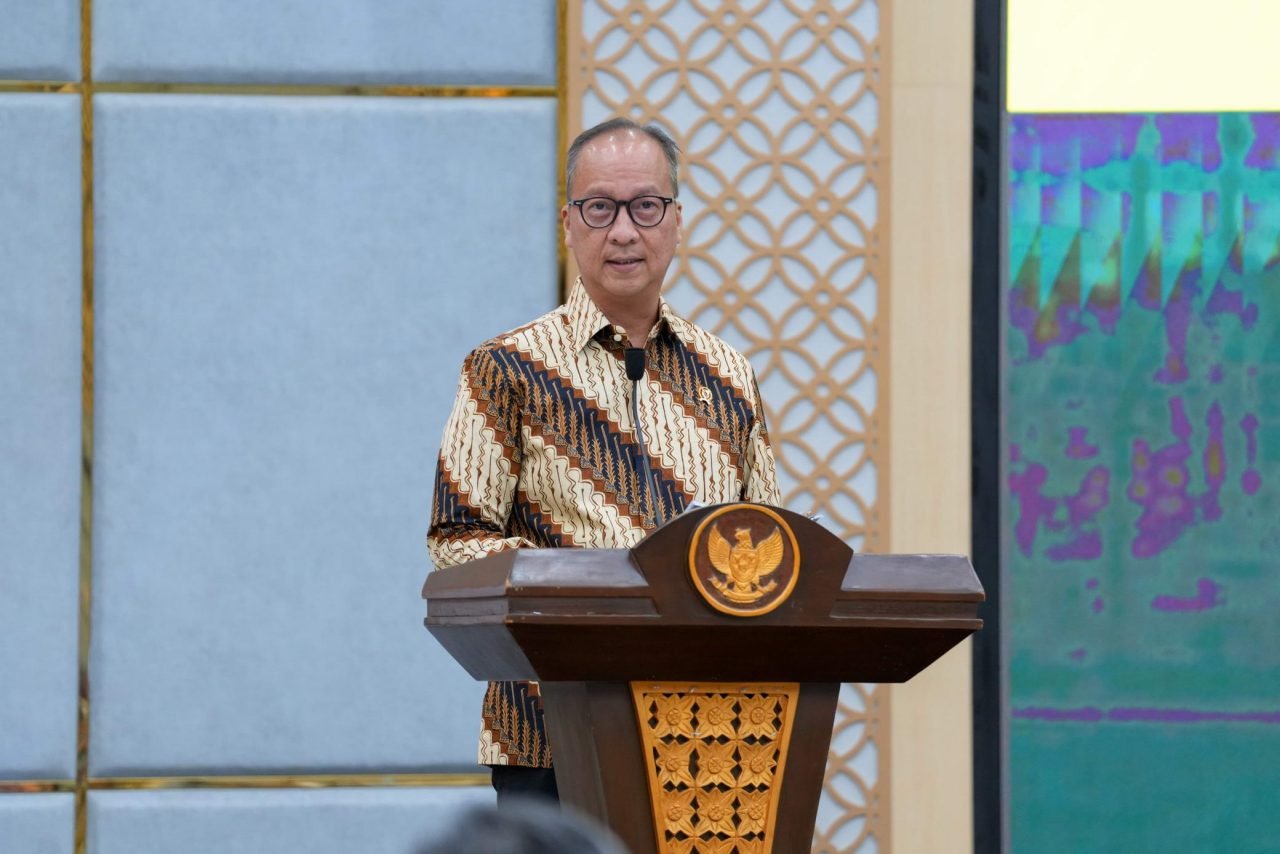
“SBIN is not just a sectoral policy of Kemenperin, but a national strategy to ensure that Indonesian industry does not merely survive, but grows and is sovereign,” Minister of Industry Agus Gumiwang Kartasasmita said at the opening of the Ministry of Industry Work Meeting 2025 in Jakarta on Monday (27/10).
According to the Minister of Industry, SBIN is a blueprint for Indonesia's industrialization in the post-pandemic and post-carbon era. The strategy combines the values of economic self-reliance, technological transformation and environmental sustainability in one integrated framework. The four main mindsets that form the pillars of SBIN are natural resource-based industrialization, industrial ecosystem development, mastery of technology and the application of sustainability principles.
Natural resource-based industrialization aims to strengthen the industrialization of leading national commodities such as nickel, palm oil and coal, so that Indonesia's natural wealth is no longer exported raw but processed into high value-added products. In addition, the development of the industrial ecosystem is pursued through the integration of upstream and downstream sectors, accompanied by stronger human resources and supporting industrial infrastructure.
“The other two pillars focus on mastery of technology and sustainable industrial development. Mastery of technology is key to increasing productivity and competitiveness, while the principles of green industry and the circular economy are the foundation of future industrial growth. True industrialization must not sacrifice the environment, but create a balance between economic progress and the preservation of nature,” he said.
On that occasion, the Minister of Industry stressed that protecting the domestic market is a top priority in SBIN, because around 80 percent of national industrial output is absorbed by the domestic market. Domestic market stability is key to the resilience of national industry so that it is not easily affected by global turbulence.
The government will therefore strengthen the Domestic Component Level (TKDN) policy so that government spending truly favors national industrial products. In addition, tariff and non-tariff instruments will continue to be optimized to control the flow of imported finished products. This policy is not intended to close the country off, but to create room for domestic industry players to grow, innovate and compete fairly.
In line with protecting the domestic market, Kemenperin will also strengthen industrial expansion into global markets through export diversification and more proactive industrial diplomacy. Non-traditional countries will be the main targets of market development, alongside efforts to expand Indonesia's participation in global supply chains. The battery-based electric vehicle (KBLBB) sector is one of the future export focuses because Indonesia has an advantage in the availability of nickel raw materials. This policy is expected to strengthen Indonesia's position as a center for electric vehicle production in Southeast Asia.
Kemenperin will also increase investment in high value-added industrial sectors oriented toward import substitution. Every investment must produce multiplier effects in the form of quality job creation, increased productivity and a stronger national industrial structure. The government will prioritize investment in strategic minerals, basic chemicals, pharmaceuticals, electronic components and food.
On the other hand, increased industrial competitiveness will be supported by mastery of technology and innovation. Kemenperin is expanding the machinery restructuring program and providing research incentives for industries that modernize. Technology transfer from global investors to national industry players will be ensured so that incoming investment brings not only capital, but also knowledge, networks and long-term partnerships.
Besides investment, strengthening human resources is key to the success of industrialization. Kemenperin continues to expand vocational education, industrial polytechnics and link and match schemes with the business world so that graduates are ready to enter modern industrial work. Improving workforce competence is also aimed at facing the era of manufacturing digitalization and the development of Industry 4.0 technology. “Industrial human resources must be the drivers of transformation, not mere spectators of change,” Minister Agus said.
In his remarks, the Minister of Industry also highlighted the importance of adaptive and pro-growth industrial regulatory reform. Overlapping or unsynchronized regulations between agencies are still a major obstacle to investment and productivity. Kemenperin is therefore pushing for smart regulation that is simple, measured and data-based. Such regulation is expected to speed up investment while closing loopholes for product imports that harm national industry.
The Minister of Industry also emphasized the importance of synergy across ministries and agencies, such as with the Ministry of Energy and Mineral Resources for energy supply, the Ministry of Agrarian Affairs and Spatial Planning/BPN for industrial land, the Ministry of Finance for fiscal incentives, the Ministry of Trade for trade policy and BRIN for strengthening research. “Kemenperin must not be passive. We must actively fight for the interests of national industry in cross-ministry forums,” he stressed.
Furthermore, the Minister of Industry stressed that strengthening the halal industry is also a strategic priority. Kemenperin ensures coordination with BPJPH and related ministries so that the halal certification process becomes an accelerator of growth, not an obstacle. The halal ecosystem will be developed comprehensively, from raw materials and production processes to product distribution, so that Indonesia can become the world's leading halal industry producer. In addition, the revision of the TKDN policy is expected to strengthen the national industrial structure through a simpler, more transparent and more accountable certification mechanism.
To achieve President Prabowo's Asta Cita, industrialization must be strongly connected between upstream and downstream sectors. Building backward-forward linkages is key to creating mutually reinforcing value chains between industries. Sectors such as palm oil and nickel are examples of how strengthening the ecosystem from raw materials to downstream products can create multiplier effects for the national economy.
“For that, concrete supporting factors are needed, such as the availability of raw materials, logistics infrastructure, sustainable energy, competent human resources, research and innovation, and smart regulation. All these supporting factors must be truly present on the ground, not just written in work plans,” the Minister of Industry said.
In his presentation, the Minister of Industry also shared lessons learned from visits to various countries, such as Japan, China and Turkey. Japan has succeeded in building an algae-based industry that supports the green economy, while China has developed coal-to-chemical technology to strengthen energy self-reliance. Turkey has successfully protected its domestic market while fostering pride in domestic products. From these visits, the Minister considers that Indonesia needs to build thematic industrial estates integrating bio-industry, clean energy and petrochemicals to create globally competitive innovation hubs.
The Minister of Industry stressed that SBIN is an important foundation in the journey toward realizing Asta Cita and Golden Indonesia 2045. Industrialization is not solely about pursuing economic growth, but about national sovereignty, equitable development and public welfare.
“We want an industry that is resilient, competitive and sustainable. Industrialization must bring real benefits to the people, create quality jobs and deliver a better future,” the Minister of Industry said.
The Ministry of Industry is committed to following up this policy direction through measurable work programs, solid synergy across units and clear performance indicators. With a spirit of collaboration, innovation and self-reliance, the Minister of Industry is optimistic that the industrial sector will be the main driving force toward economic self-reliance and the glory of Golden Indonesia 2045.
Source: Press Release of the Ministry of Industry of the Republic of Indonesia