
Batik is a national cultural heritage that not only has high artistic value, but is also an important driver of the national creative economy. As a noble identity recognized by the world through its inscription by UNESCO as Intangible Cultural Heritage in 2009, batik continues to develop through craftsmen's innovation and the support of various stakeholders.
In recent years, batik has grown closer to the younger generation (Gen Z), who actively promote batik through fashion, digital content and creative entrepreneurship. Currently, more than 53.8% of Indonesia's population are millennials and Gen Z. This means the younger generation has great potential and plays an important role in preserving and innovating batik so that it remains relevant across generations.
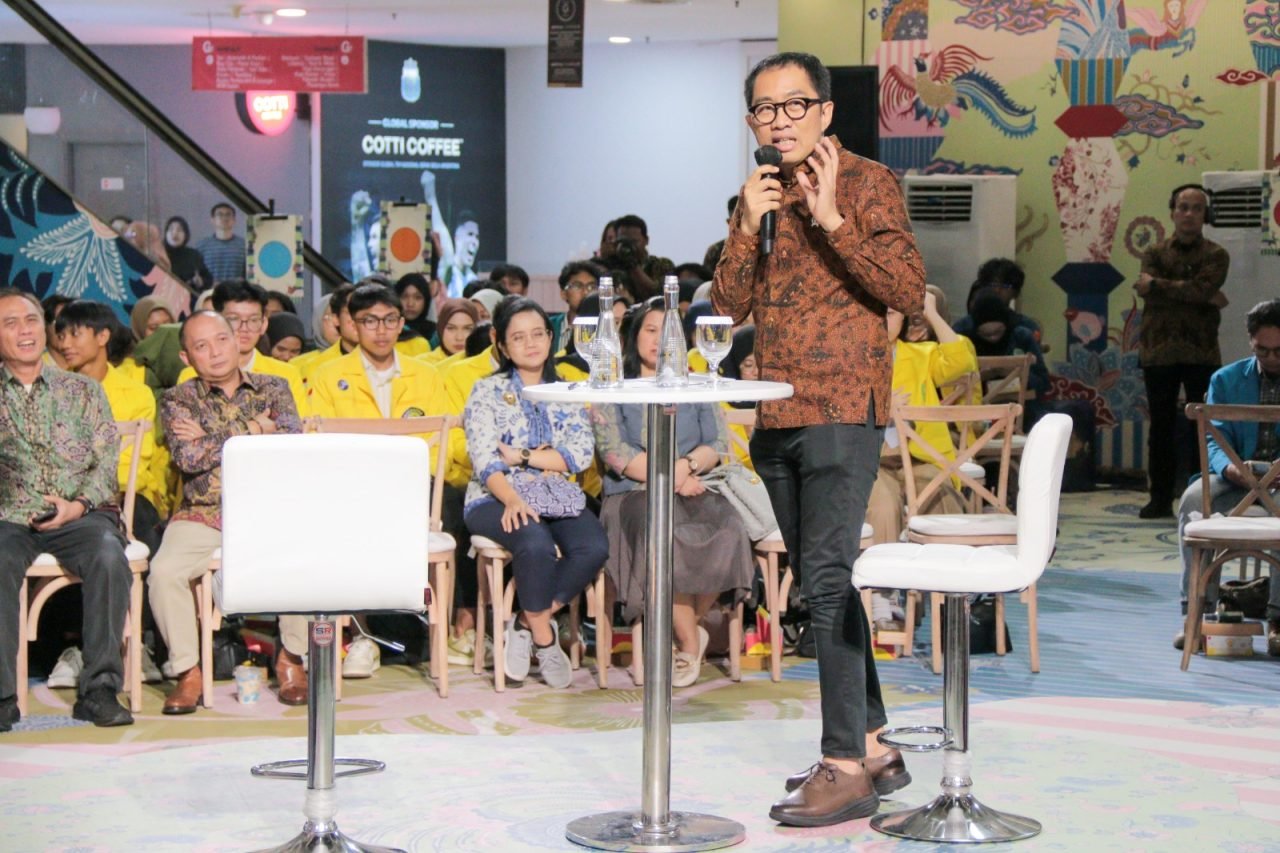
“You may think batik is a cultural heritage closely tied to the past. But you should know that batik makers in the old days were young people too, not old people as we see today. They created batik motifs from experience, inheritance from their parents, their surrounding culture and inspiration,” Deputy Minister of Industry Faisol Riza said at the public lecture “Batiking Minds, Coloring Character, Stitching Aspirations” as part of Industrial Festival feat. Gelar Batik Nusantara 2025 in Jakarta on Wednesday (30/7).
In the forum, attended by more than 300 students, the Deputy Minister invited young people to make use of their productive years and the wide opportunities they have. Moreover, before long, students will enter a new stage, the world of work, a phase full of increasingly complex and dynamic challenges. The Deputy Minister therefore stressed the importance of five key skills young people need.
First, intellectual readiness: young people should be ready to take on the real world. In addition, young people should understand the history and philosophy of batik as part of the national identity, and be aware of the challenges globalization poses to local culture.
Second, digital and creative skills. Today, digitalization linked to creativity is unavoidable in every aspect of daily life. Young people can improve skills such as graphic design and animation, and use social media by becoming content creators to introduce batik.
“The ecosystem in Indonesia is actually very supportive of digitalization. The problem is that our digital infrastructure is not yet strong or evenly distributed. That is why the Ministry of Industry continues to work hard so that our nation has the best possible digital infrastructure,” he said.
Third, entrepreneurial experience. If young people can consolidate all the potential in entrepreneurship, manage it well and run it optimally, it can grow into a large industry. To start, they can build local batik-based brands with modern approaches such as streetwear, sustainable and fashion.
Fourth, social and environmental sensitivity. One example can be seen today in the issues that are always in the spotlight for young people, from movements against single-use plastic products, renewable energy and waste management to cleaning rivers of waste. That sensitivity, Faisol continued, is potential for achieving young people's future goals and aspirations.
Fifth, a proud and active attitude. The Deputy Minister stressed the importance of young people having ambition that serves as a compass in achieving their aspirations. It is also important to get used to making clear plans, so that their enthusiasm and activity can be measured and directed.
“You are the hope of us all, the future of Indonesia. So don't gamble your lives on something that seems far from your aspirations and goals. Of course, I also hope that you will continue to love batik,” he said.
In the Q&A session with students, Deputy Minister Faisol stressed that the government is committed to continuing to support batik craftsmen, in order to encourage the involvement of the younger generation in efforts to preserve batik wastra.
“The government, through many ministries, provides a great deal of support to batik craftsmen, including the Ministry of Industry, the Ministry of Micro, Small and Medium Enterprises (MSMEs), the Regional National Crafts Council (Dekranasda) and state-owned enterprises (BUMN). All have programs to support batik,” he said.
Industrial Festival 2025, in collaboration with Gelar Batik Nusantara, will take place on 30 July – 3 August 2025 at Pasaraya Blok M. The festival carries the tagline #BATIKRIZZ, affirming that batik is not merely a cultural heritage, but also part of today's creative industry that upholds innovation, digitalization and sustainability principles. Besides the exhibition, there will be community engagement talk shows discussing batik industry innovation through sustainable fashion and the use of technology.
The festival will also feature a Creative Content Competition and the launch of an Industrial Mascot Contest open to the public, including students, to design a mascot representing the spirit of Indonesia's Industry 4.0.
Source: Press Release of the Ministry of Industry of the Republic of Indonesia