
Indonesia is one of the world's largest pineapple producers, even ranking first in 2024 with total production of 3.15 million tons. Behind the abundant supply of this tropical fruit lies a great opportunity in processing pineapple leaf waste into leaf fiber, commonly known as
leaf fiber.
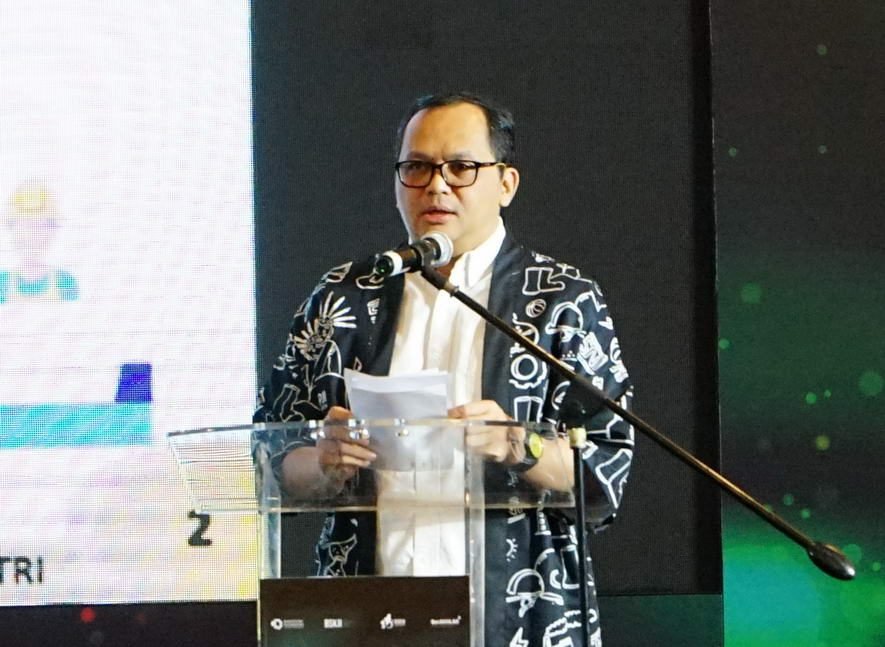
“Leaf fiber is fiber taken from the leaves of plants and has a variety of superior characteristics. Leaf fiber is increasingly in demand, both to meet the needs of the fashion industry and of non-textile industries,” the Head of the Agency for Industrial Standardization and Services Policy (BSKJI), Andi Rizaldi, said in an official statement in Jakarta on Sunday (25/5).
According to the Head of BSKJI, market growth for leaf fiber is driven mainly by consumers' increasing preference for environmentally friendly products. According to a Dataintelo report, the global market for leaf-fiber fabric for clothing was worth around USD 1.2 billion in 2023 and is projected to rise to USD 2.8 billion by 2032.
“One strategy for increasing industrial competitiveness is creating a value chain, in which product advantages are built on consumer demand,” he said. With growing awareness of sustainable industry issues, Andi continued, leaf fiber offers a promising solution, both as a biodegradable raw material and in using the abundant waste from plantation activities.
“The solution touches several aspects. First, it becomes an alternative natural fiber commodity that can be used as an environmentally friendly, biodegradable raw material. Second, it reduces air pollution,” he added.
Instead of burning leftover leaves after the pineapple harvest, farmers can now process them into derivative products with a fairly high selling price. “This is the third aspect, namely creating green jobs in Indonesia's fiber-producing areas,” Andi said.
The advantages of pineapple leaf fiber include a soft, light material with a silk-like sheen, making it suitable as a base material for clothing and accessories. In addition, its high strength and durability mean the fiber is widely used for interior and automotive textiles, as well as raw material for other industries.
“The challenge in meeting this diverse market demand is to keep developing natural fiber processing technology and to introduce this processing to industry stakeholders, including regional governments,” Andi said. This industrial development program is carried out by one of the UPTs under Kemenperin, the Center for Standardization and Industrial Services (BBSPJI) Tekstil Bandung, in cooperation with the Office of Industry, Trade, Cooperatives and SMEs of the East Kalimantan Provincial Government.
The Head of BBSPJI Tekstil, Cahyadi, explained that the cooperation was carried out to support the East Kalimantan Government in increasing added value and downstreaming industry based on pineapple fiber natural resources as an industrial raw material, especially for textile products.
“As an initial activity, 14 pineapple farmers from East Kalimantan attended technical guidance on pineapple fiber processing at the Natural Fiber Processing Testbed facility of BBSPJI Tekstil Bandung,” he explained.
This industrial development must not stop at introducing process technology and providing natural fiber processing machines, but must continue with building the capacity to create a pineapple fiber value chain. “In addition, it is necessary to read market demand forecasts, understand quality standards for natural fiber commodities, and have the drive to keep developing products with a competitive advantage,” Cahyadi concluded.
Source: Press Release of the Ministry of Industry of the Republic of Indonesia