
The fashion industry is now one of the sectors with a major influence on people's lifestyles, while also facing challenges in environmental conservation. The fashion industry is therefore also required to transform into a more environmentally friendly and sustainable industry.
“With their wealth of wastra culture and creativity, small and medium industry (SMI) players in the fashion sector have great potential to apply the concept of sustainable industry,” Minister of Industry Agus Gumiwang Kartasasmita said in a statement in Jakarta on Tuesday (9/9).
According to the Minister of Industry, this transformation not only supports reducing environmental impact, but also creates new economic opportunities involving local communities, young designers and SMI players in various regions. “As part of these efforts, the Ministry of Industry, through the Directorate General of Small, Medium and Miscellaneous Industries (IKMA), continues to pursue fashion industry development strategies that support the growth of environmentally friendly industry,” he said.
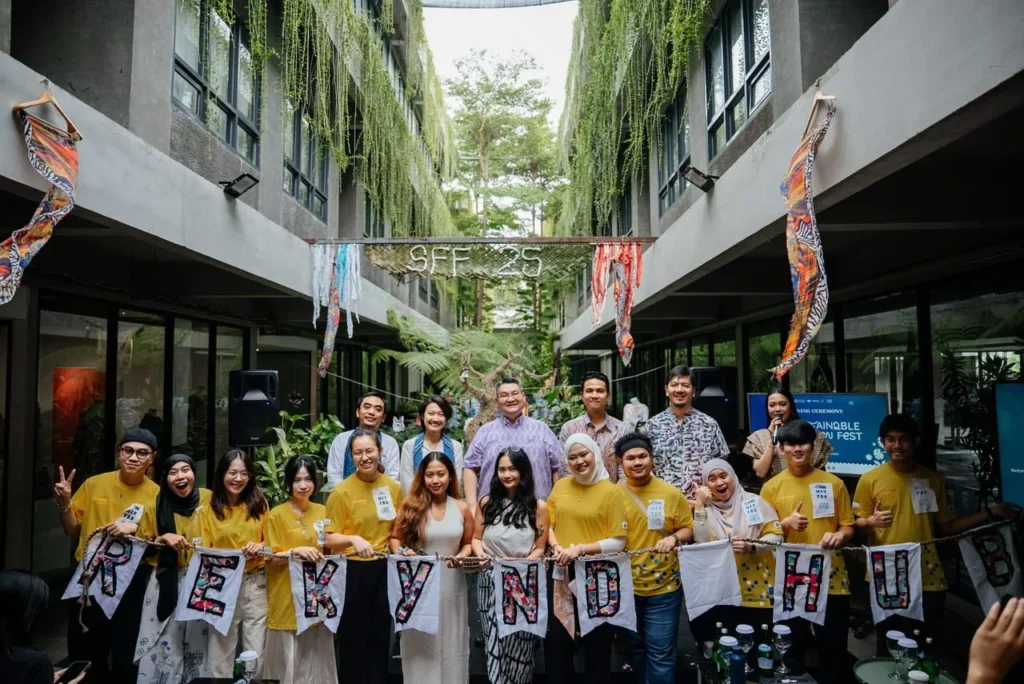
The Director General of IKMA at Kemenperin, Reni Yanita, said that to accelerate this transformation in the fashion industry, efforts are needed to build cross-sector collaboration involving government, communities, creative businesses and the private sector. One example is the Fashion and Craft Industry Empowerment Center (BPIFK), a work unit under Kemenperin's Ditjen IKMA, which worked with TRI Cycle to hold the Sustainable Fashion Festival (SFF) 2025 on 2–3 August 2025 in Denpasar, Bali.
“The festival received an enthusiastic response from all levels of society and became a platform for education, creativity and concrete action toward sustainable fashion,” she said. Over the two days, SFF 2025 attracted 866 visitors.
With the theme “Celebrate the Better Fashion”, the festival featured a range of inspiring programs, including fashion shows from eight sustainable brands, an exhibition of 17 winning works from the Indonesia Fashion and Craft Award (IFCA), and creative workshops such as ecoprint, plastic fusion and crochet.
SFF also featured three educational talk show sessions with more than 120 participants, a Repair Corner with the local tailors' community, and a Clothes Swap that collected 760 kilograms of used clothing. Meanwhile, the SMI Bazaar featured 39 brands from Bali, Java, Yogyakarta, Lampung, Papua and Jakarta, with total sales transactions of more than IDR 58 million. The SINI BISA Clinic also received positive attention for its business legality consultation services, such as NIB, SIINas and TKDN IK, for fashion SMI players.
Reni said the enthusiasm of the public and SMI players at the festival is proof of the growing public interest in sustainable fashion. She also stressed the importance of maintaining this spirit so that it keeps growing and has a broad impact on local industry players.
“Seeing the public's enthusiasm at SFF 2025, we are optimistic that the Indonesian fashion industry has a bright future with a sustainable industrial approach. We hope this festival will be a first step toward creating a fashion ecosystem that is more responsible, inclusive and globally competitive,” she said.
The Head of the Fashion and Craft Industry Empowerment Center (BPIFK), Dickie Sulistya Aprilyanto, explained that the festival was the launch platform for two new initiatives by the brand TRI Cycle, an alumnus of BPIFK's 2018 Creative Business Incubator program: Rekynd Hub and Brickini. The launch was an important step in affirming SFF 2025's position as a center for community-based sustainability innovation.
“Both initiatives not only offer creative solutions for managing textile waste, but also educate the public to value clothing in terms of function and sustainability, rather than simply following trends,” he explained.
Dickie also said Rekynd Hub was introduced as a textile management space with a textile circularity concept, where visitors can donate used clothing, reprocess it and buy local (non-imported) preloved clothing through a unique weight-based system. Brickini, meanwhile, is a collaboration between TRI Cycle and Parongpong Raw Lab that processes swimwear waste from swimwear manufacturers in Bali.
“We want to encourage the public to see clothing not only as a short-term consumer product, but also as an asset that can be reused, given new value and help reduce textile waste,” he added.
Source: Press Release of the Ministry of Industry of the Republic of Indonesia