

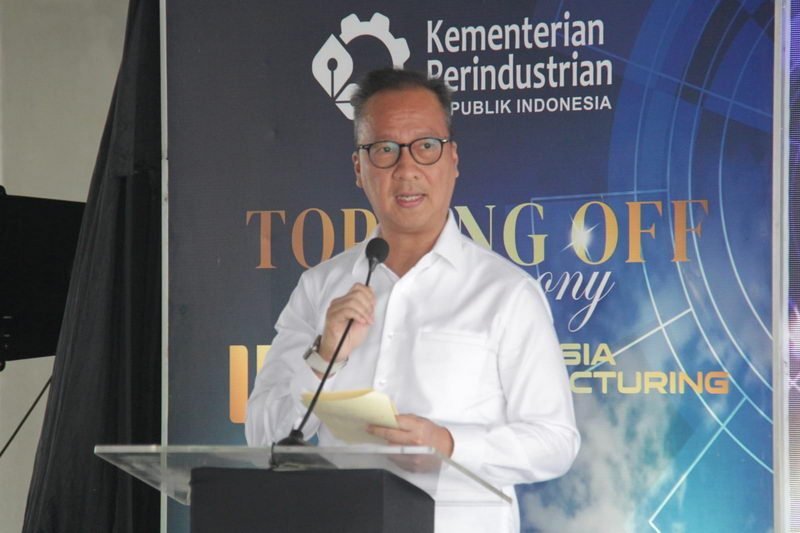
Ahead of the 100th anniversary of the national textile industry, the Ministry of Industry (Kemenperin) and the Ministry of Communication and Information Technology (Kominfo) held a Government Public Relations Coordinating Body (Bakohumas) Thematic Forum themed “The 100-Year Journey of the Textile Industry in Indonesia”. It aimed to inform government public relations officers about the textile industry's performance and role in the economy and the policies Kemenperin is pursuing to maintain its competitiveness and productivity.
“The domestic textile industry has come a long way, from the colonial era to the digital age. Kemenperin runs various policies and programs to keep improving its competitiveness and productivity, so the national textile industry continues to develop in line with global market trends,” Ministry of Industry Secretary General Dody Widodo said at the Bakohumas Thematic Forum in Bandung on Friday (29/7).
In 2021, the textile and textile products (TPT) industry grew significantly, reaching 12.45% (year on year). TPT exports also performed well, rising 12.45% in 2021 compared with the same period the previous year. “Investment in the TPT industry also rose 6.4% in Q1-2022,” Dody explained.
Given its contribution to manufacturing growth and its impact on livelihoods as a labor-intensive, export-oriented sector, Kemenperin made the TPT industry one of seven priority industries in the Making Indonesia 4.0 Roadmap, together with food and beverages, chemicals, automotive, electronics, pharmaceuticals and medical devices.
By applying Industry 4.0 technology, the TPT industry will be able to develop products according to evolving needs and trends, including meeting market demand for functional apparel and technical textiles needed by other sectors such as aviation, health (biomedical), automotive, agriculture and construction.
To improve TPT industry competitiveness, Kemenperin has set programs including 35% import substitution, raw material incentives, Industry 4.0 implementation in the TPT industry, lower natural gas prices for upstream textile and textile raw material industries, and import controls and trade remedies for TPT products. “Kemenperin also formulated the Increased Use of Domestic Products (P3DN) policy and improvement of industrial human resource competence, which also support TPT industry development,” he said.
Indonesia's modern textile industry began with the founding of the Textiel Inrichting Bandoeng (TIB) in 1922, reaching a century, or 100 years, in 2022. TIB is the forerunner of Kemenperin's industrial service institution, the Center for Textile Industrial Standardization and Services (BBSPJIT) in Bandung, which also gave rise to Indonesia's oldest textile vocational school, now Politeknik STTT Bandung (Polytechnic of Textile Technology).
To educate skilled and competent human resources for the TPT industry, Kemenperin, through Politeknik STTT, provides vocational education up to the applied master's level (S2). This is Indonesia's first textile master's program and is expected to contribute to the progress of Indonesia's textile industry and benefit the development of advanced textile science, or smart textiles. This is in line with Politeknik STTT's vision to become an excellent, globally competitive industrial vocational education provider in textiles and textile products by 2035.