

The Ministry of Industry continues to encourage the food industry sector, including small and medium industries (SMIs), to meet food safety standards. Applying good manufacturing guidelines at every stage of production is a prerequisite for expanding market access, protecting consumers and maintaining business sustainability. These efforts also increase market confidence in domestic food products amid tight global competition.
“By applying standardization, the quality of SMI food products will be better maintained and gain greater consumer trust, which also supports the growth of their businesses,” Minister of Industry Agus Gumiwang Kartasasmita said in a statement on Saturday (6/9).
The Director General of Small, Medium and Miscellaneous Industries (IKMA), Reni Yanita, explained that in terms of its basic function, food is a basic human need that plays an important role in maintaining health. Food safety is therefore absolutely essential in the production process to ensure consumer health.
“Government Regulation Number 86 of 2019 on Food Safety, Quality and Nutrition states that every party responsible in the food chain, including in the production, storage, transport and distribution of food, must meet sanitation requirements in accordance with applicable regulations,” she said.
Ditjen IKMA of Kemenperin therefore continues to push food SMIs to meet Good Manufacturing Practices (GMP), or Good Processed Food Production Practices (CPPOB), and Hazard Analysis and Critical Control Points (HACCP), a designed food safety management system. The aim is to identify, prevent, evaluate and control hazards that could affect the safety of food products.
“GMP and HACCP are guidelines governing how companies or producers produce food that is safe, of good quality and fit for consumption,” Reni said.
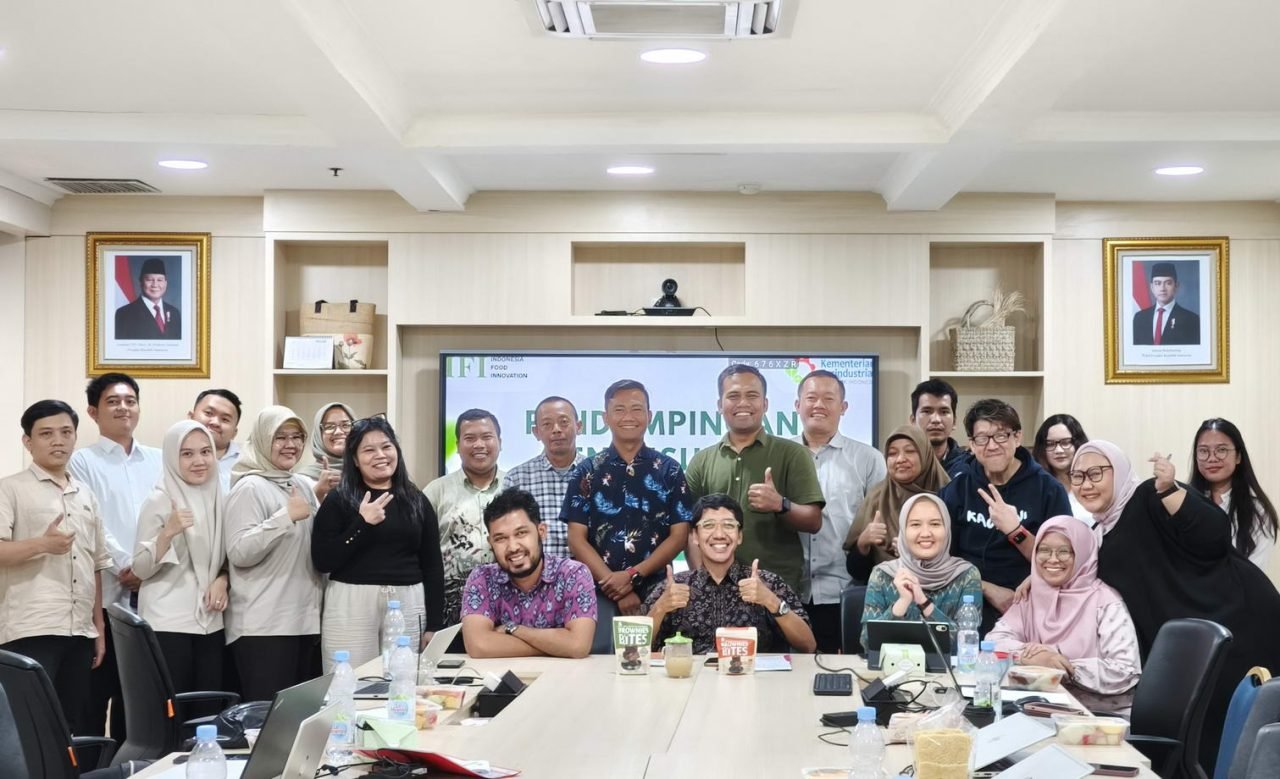
To increase the competitiveness of and market confidence in national food products through compliance with HACCP standards, Ditjen IKMA held intensive HACCP Document Preparation Assistance for 10 selected food SMIs in two batches.
The first batch, held last June, was attended by APB Sambal, PT. Rahasia Kuliner Surga, CV. Kreasi Pangan Global, PT. Crispy Salad Moonbite and PT. Imago Randau Harmoni. The second batch, held on 19–21 August 2025, was attended by CV. Kims Pangan Jaya, Novio Fresh, PT. Battenberg Tiga Indonesia, PT. Inovasi Pangan Global and PT. Kawani Jadi Berkat.
The assistance program is part of a series that began with the online Workshop on Implementing Food Safety Systems through HACCP held at the end of April 2025. In this assistance, experts help SMI players prepare HACCP documents tailored to the characteristics of their products and production processes. As a result, SMI players are better prepared to apply for food safety certification while meeting one of the requirements for exporting.
“We hope this program can encourage food SMI players to be more confident in expanding their markets and moving up a class by applying food safety standards,” Reni said.
Ditjen IKMA also continues to develop food SMIs through various incentive facilities and programs to help them excel, face intense competition, become part of the supply chain for other food industries (small, medium and large), and partner with other economic sectors, including HoReCa.
The Director of Food, Furniture and Building Materials SMIs, Bayu Fajar Nugroho, added that the workshops and assistance are part of the government's commitment to supporting the transformation of food SMIs into an industry that is competitive, innovative and compliant with international food safety standards.
“This is also driven by the fact that the food and beverage industry sector plays a vital role as a provider of jobs and a driver of the local economy that contributes to national food security,” he explained.
According to Bayu, Indonesian food SMI products have great opportunities to penetrate export markets. It is therefore very important for SMI players to keep preparing themselves, improve product quality, build strong brand images and adapt to market trends and needs at home and abroad.
“We want food SMI players to keep up their enthusiasm in strengthening their business foundations, expanding their market reach and increasing product competitiveness, so that Indonesian food SMIs can stand on an equal footing with global food industry players,” he said.
Source: Press Release of the Ministry of Industry of the Republic of Indonesia