
The Ministry of Industry continues to encourage industrial estates to adopt an environmentally sound development concept (eco-industrial park) to increase their competitiveness. To achieve this, Kemenperin runs the Global Eco-Industrial Park Programme-Indonesia (GEIPP-Indonesia) in cooperation with the United Nations Industrial Development Organization (UNIDO) and the Swiss State Secretariat for Economic Affairs (SECO).
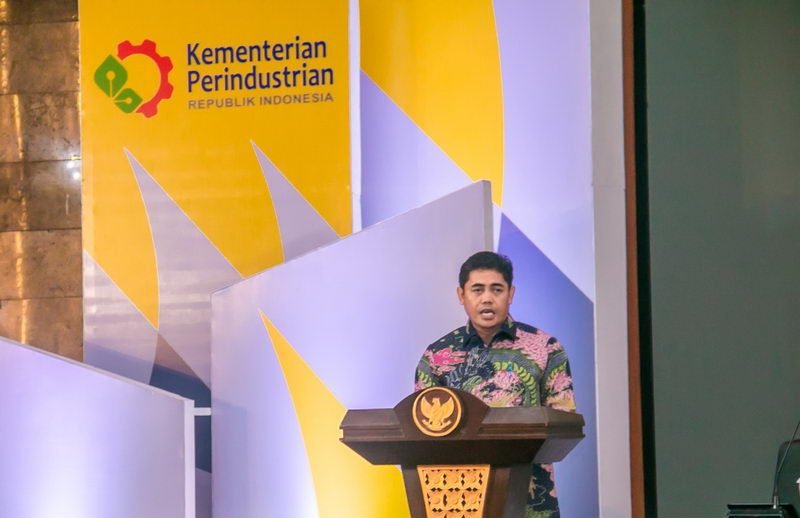
Recently, Kemenperin held the second Eco-Industrial Park (EIP) Inter-Ministerial Forum Roundtable Meeting in Jakarta. It was based on Minister of Industry Decree No. 3174 of 2022 on the Inter-Ministerial Forum for Accelerating the Development of Environmentally Sound EIP Industrial Estates in Indonesia.
“One task of the EIP Inter-Ministerial Forum is to provide input and contributions for drafting regulations to accelerate EIP development in Indonesia,” said the Director General of Resilience, Regional Development and International Industrial Access (KPAII) at Kemenperin, Eko S.A. Cahyanto, in Jakarta on Wednesday (14/6).
Participants at the second Roundtable Meeting included representatives of relevant ministries and agencies such as the Coordinating Ministry for Economic Affairs, the Ministry of Industry, the Ministry of Environment and Forestry, the Ministry of Home Affairs, and the Ministry of National Development Planning/National Development Planning Agency.
On that occasion, UNIDO Chief Technical Advisor (CTA) Salil Dutt presented the background of the GEIPP-Indonesia program. “Together we are transforming industrial estates in Indonesia into Eco-Industrial Parks, in line with and supporting the global vision of reducing emissions from industrial activity,” he said.
Unlike the first Roundtable Meeting, which discussed water supply and wastewater as well as the use of waste and materials, the second Roundtable Meeting focused on energy, including energy consumption, energy efficiency and the development of new and renewable energy in EIPs in Indonesia.
The Assistant Deputy for Strengthening Regional Competitiveness at the Coordinating Ministry for Economic Affairs, Kartika Listriana, explained that energy use is now trending not only as a utility provided by estate operators for industrial tenants, but also as a future investment. “Solar energy, as an energy source from sunlight, is starting to be developed as an industry by investors, especially foreign investors interested in investing in Indonesia,” she said.
The Director of Industrial Regional Development at Kemenperin, Heru Kustanto, said energy is one of the environmental performance requirements industrial estate companies must meet. However, there are still obstacles to overcome together, such as the limited availability of New and Renewable Energy (EBT).
Support needed by Industrial Estates includes information on policies for installing EBT in industrial estates, support for energy efficiency investment in industry, and other technology-related support. “Therefore, cooperation among stakeholders is needed to support meeting performance requirements for energy consumption, energy efficiency and EBT development in EIPs in Indonesia,” Heru said.
The EIP development program has an important impact on sustainable environmental conservation in industry. This is in line with Indonesia's commitment to building a globally competitive manufacturing industry by accelerating Industry 4.0 implementation. EIP requirements also cover estate management, environmental, social and economic aspects. There are currently three Global Eco-Industrial Park Programme (GEIPP-Indonesia) pilot projects: MM2100 Industrial Estate, Batamindo Industrial Estate and Karawang International Industrial City (KIIC).
With over a year of mentoring through workshops and capacity building for each of the three estate operators, held through the end of 2022, EIP performance rose by 10% at Batamindo Industrial Estate and 1% at MM2100 Industrial Estate. KIIC has not yet shown improved performance, as it only joined GEIPP-Indonesia in mid-2022. “In the next period, we hope the performance improvements of each GEIPP-Indonesia pilot estate will be more significant as estate operators understand the importance of implementing EIP,” he concluded.
Source: Press Release of the Ministry of Industry of the Republic of Indonesia