

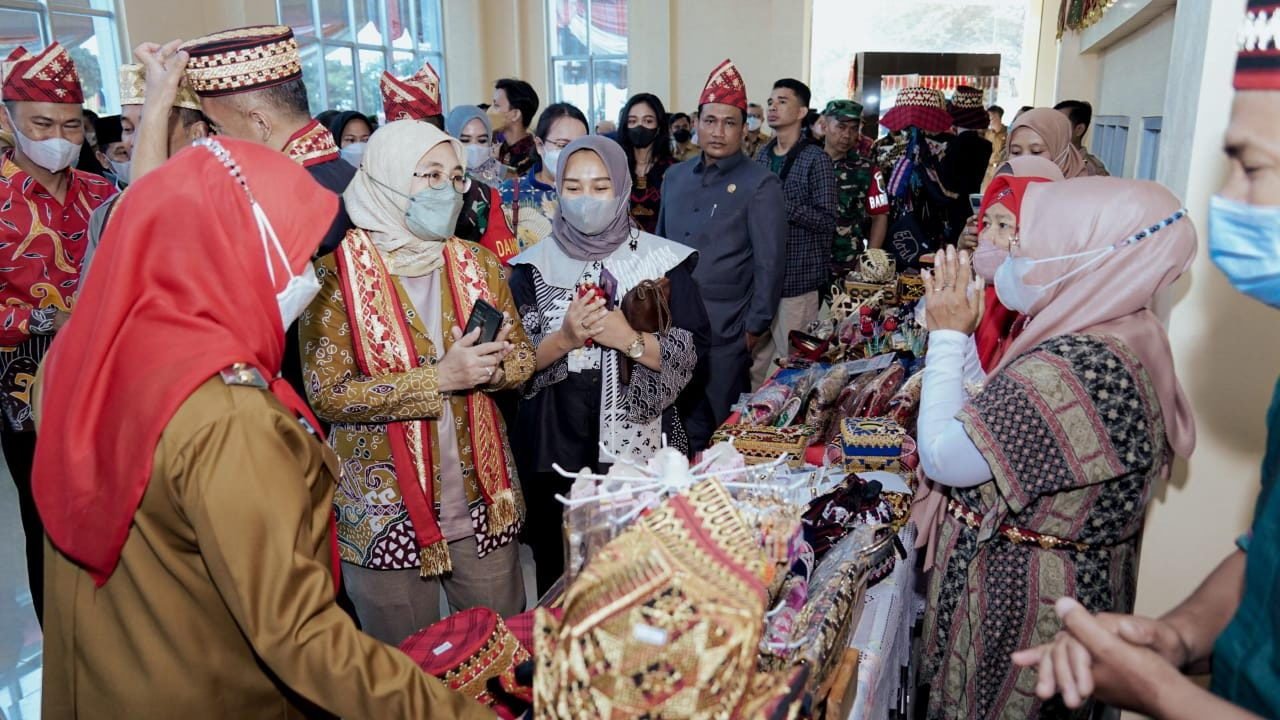
The Ministry of Industry is focusing on developing small and medium industry centers across Indonesia. This strategic effort aims to strengthen the national industrial structure, create jobs and increase exports.
“To achieve this, the Ministry of Industry, through the Directorate General of Small, Medium and Miscellaneous Industries (IKMA), is strengthening institutional capacity and providing facilities at SMI centers to increase their competitiveness,” the Director General of IKMA at Kemenperin, Reni Yanita, said in Lampung on Wednesday (26/10).
The Director General of IKMA explained that SMI centers enable knowledge sharing among SMIs while strengthening branding and marketing for SMI products. “The guidance provided to SMI centers is expected to improve human resource competence, raise production quality and assure the final quality of SMI products,” she said.
According to Reni, SMI center development is regulated by Government Regulation No. 29 of 2018 on Industrial Empowerment. It states that an SMI center is a group of SMIs in one location consisting of at least five business units producing similar products, using similar raw materials and/or carrying out the same production processes.
“An SMI center has management, operators, members and a technical service unit,” she said. SMI centers are considered important in spreading and evenly distributing SMIs throughout Indonesia.
The 2020 Indonesian Industrial Center Directory, published by Statistics Indonesia (BPS), lists 13,762 SMI centers in Indonesia with a total of 516,124 business units.
“These industrial centers are within village boundaries and meet criteria including organization or guidance from ministries/offices/agencies, public recognition, and similar businesses in the village making up at least 20 percent of households,” Reni said.
SMI centers generally describe locations with raw materials and human resources able to support production at an industrial level. That is, enough raw material to produce at economic scale, sufficient skilled workers, and several SMIs grouped to fill a particular production value chain.
“Support for SMI center development from both central and regional governments must yield flagship products, whether OVOP products, export products, contributions to food security, or as part of large industries' supply chain,” Reni said.
Source: Press Release of the Ministry of Industry of the Republic of Indonesia