

Under Government Regulation (PP) Number 14 of 2015 on the National Industrial Development Master Plan (RIPIN) 2015–2035, industrial services are one of the supporting sectors in building national industry. Industrial services play a strategic role as an enabler for effective, efficient, integrated and comprehensive industrial development, and support activities in the processing industry and other sectors to contribute to national GDP.
“The Ministry of Industry estimates the contribution of industrial services in 2015–2022 at 3.35–3.75 percent of national GDP. In addition, Indonesia's total exports of services in 2022 reached USD 23 billion, of which around USD 370 million were maintenance and repair services,” Minister of Industry Agus Gumiwang Kartasasmita said at the Industrial Services as a Booster of Industrial Sector Contribution event in Jakarta on Tuesday (23/7).
The Minister explained that industrial services activities are based on three approaches—general, technical and legal—to operationalize the classification of industrial services according to the Indonesian Standard Industrial Classification (KBLI). “Kemenperin currently oversees 520 KBLI codes (5-digit), of which 71 are within the scope of industrial services,” he said.
Given the importance of industrial services, the Minister said his side, through the Agency for Industrial Standardization and Services Policy (BSKJI), is drafting a roadmap for developing industrial services in 10 priority subsectors as mandated by Presidential Regulation (Perpres) No. 74 of 2022. The 10 subsectors include Industrial Design and Construction Services, Industrial Equipment Installation and Commissioning Services, Industrial Research, Engineering and Design Services, and Industrial Process Services.
Next come Maintenance and Repair Services, Industrial Management Consulting Services, Industrial Logistics and Distribution Services, Certification, Testing, Inspection and Calibration Services, Packaging Services, and Industry 4.0 Support Services. “This is of course an opportunity for stakeholders to participate by offering their views and positioning in support of drafting the roadmap,” the Minister said.
Perpres 74/2022 also states seven targets for the industrial services development program, including the availability of a classification of industrial services activities, mapping of industrial services' contribution to national GDP, and drafting of policy recommendations for developing priority industrial services.
Other targets are improved supporting infrastructure for industrial services, increased capability of domestic industrial services to support industry, increased competence of domestic industrial services HR, and a greater role for industrial services globally.
The Minister added that programs and facilities Kemenperin currently provides for industrial services to strengthen industry include drafting Norms, Standards, Procedures and Criteria (NSPK) for industrial services, and facilitating and assisting industrial services development.
“We are also building partnerships between industrial services players and manufacturing and other sectors, increasing competitiveness through knowledge transfer among industrial services stakeholders, and encouraging opportunities and cooperation in industrial services at national, regional and international levels,” he added.
The Head of BSKJI, Andi Rizaldi, explained that the role and function of industrial services are becoming more significant with developments in technology, digitalization and sustainability in the industrial value chain, encouraging the emergence and growth of industrial services businesses in Indonesia.
“Industrial services can act as an enabler for effective, efficient, integrated and comprehensive industrial development, and support activities in the processing industry and other sectors to contribute to national GDP,” he said.
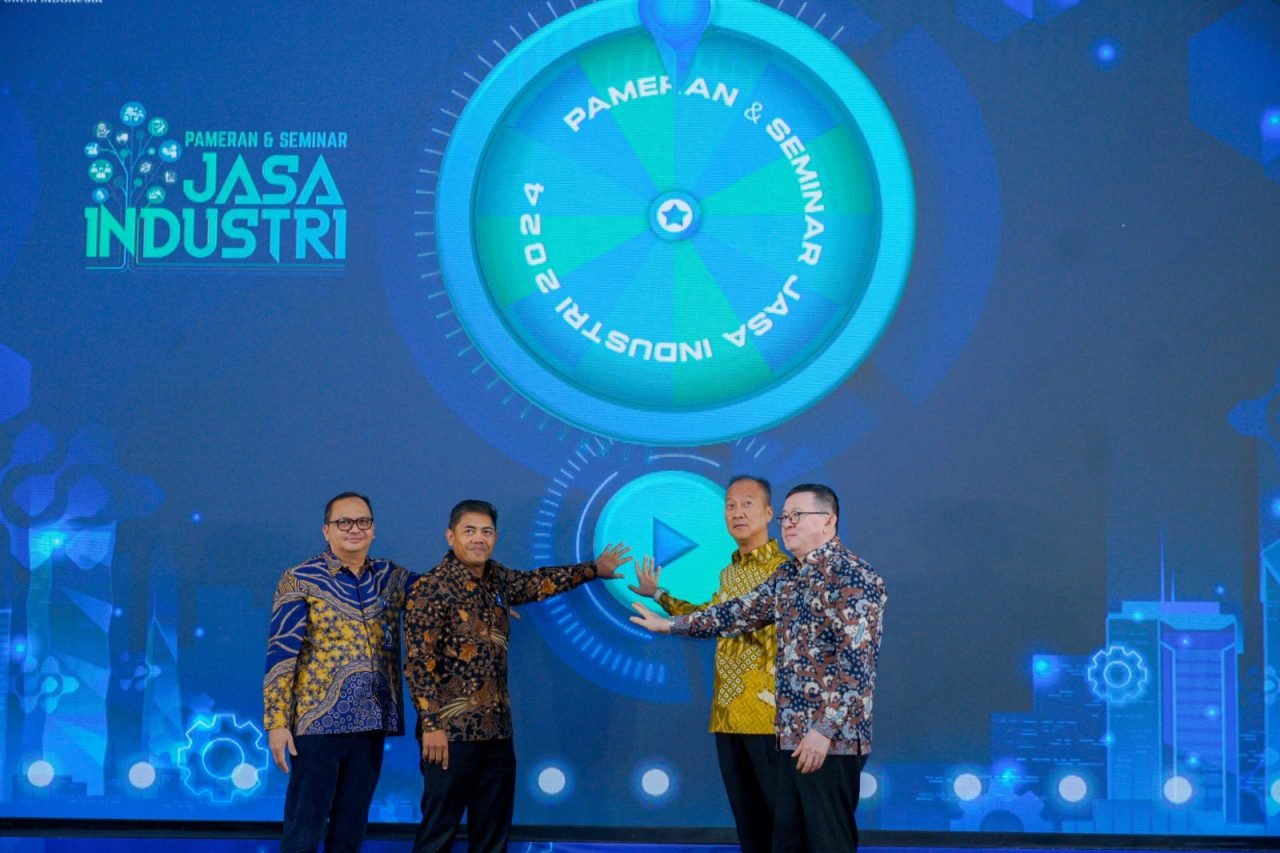
BSKJI therefore held the Industrial Services Exhibition and Seminar on 23–25 July 2024 at Kemenperin, Jakarta. “The event aims to introduce and promote industrial services stakeholders, grow the industrial services ecosystem as an enabler of national industrial growth, and develop the potential and role of industrial services in the industrial sector within the national economy,” he explained.
The Industrial Services Exhibition and Seminar featured 44 exhibitors from industrial services companies and associations, as well as centers under BSKJI. The seminar and talk shows discussed the positioning, role and contribution of industrial services in strengthening the industrial sector's role in Indonesia's economy.
The seminar and talk shows featured speakers from industrial services stakeholders. There were also discussions on industry and industrial services topics to engage visitors, packaged as games and product and service demos by exhibitors.
Source: Press Release of the Ministry of Industry of the Republic of Indonesia