
Amid global economic dynamics, the national fashion and craft industry sector has been able to maintain positive performance through increased productivity and innovation, while adapting to changes in the market and consumer needs. Strengthening human resource capacity, business innovation and collaborative networks are important factors for fashion and craft SMIs to grow sustainably and become part of national industrial supply chains and global markets.
In line with this, the Ministry of Industry, through the Directorate General of Small, Medium and Miscellaneous Industries (Ditjen IKMA), held the online Kick Off of the Creative Business Incubator (CBI) 2026 Program on Monday (20/7).
The program, run by the Fashion and Craft Industry Empowerment Center (BPIFK), is one of the development programs designed to strengthen the entrepreneurial ecosystem in the fashion and craft sector through structured learning covering lectures, independent assignments, evaluation and business pitching, involving academics and competent practitioners in fashion and craft.
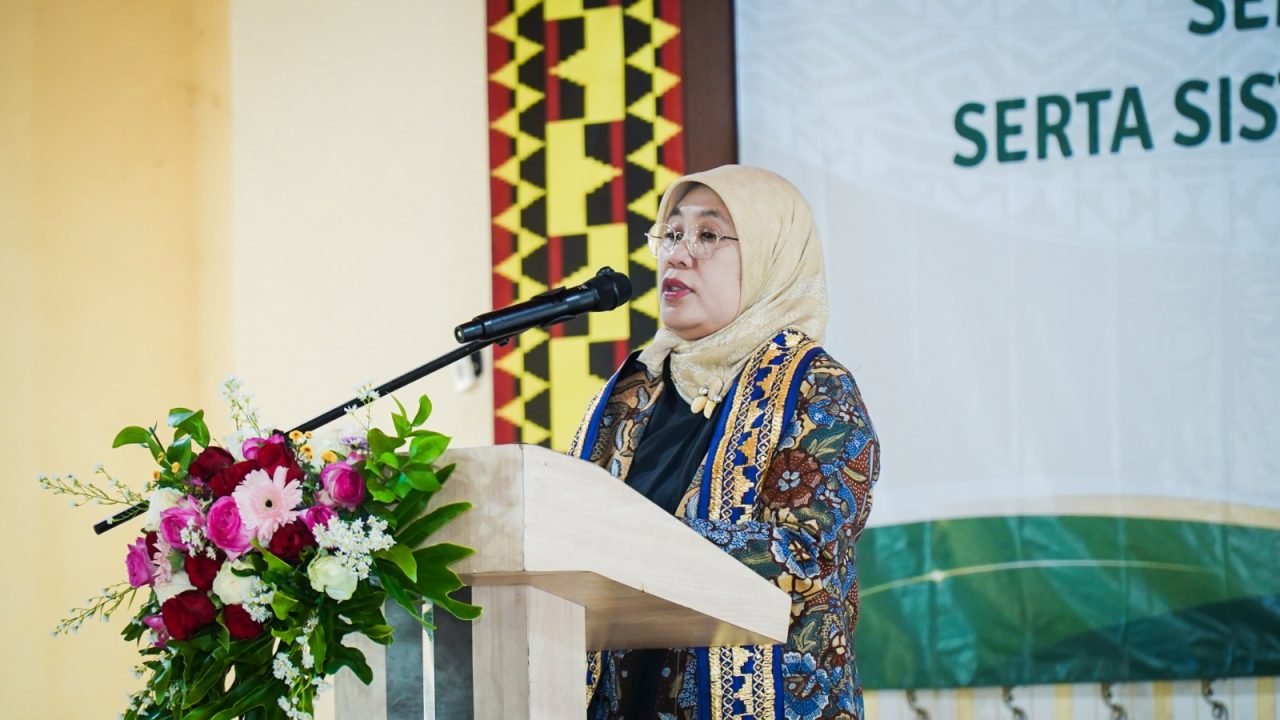
“The government continues to provide various development programs capable of strengthening the capacity of SMI players so that they can grow, move up a class and make a greater contribution to the national economy,” Minister of Industry Agus Gumiwang Kartasasmita said in a statement in Jakarta on Tuesday (20/7).
Minister Agus said the challenge today is not only creating new entrepreneurs, but also ensuring SMI players can develop into productive, innovative and sustainable businesses. “We need to strengthen integrated local supply chains so that SMIs can connect with one another, increase their use of domestic raw materials and services, and become part of an industrial ecosystem capable of generating greater added value,” Agus said.
Agus added that the success of entrepreneurship development is also determined by the quality of the assistance given to businesses. Studies show that mentorship plays an important role in improving technical competence while shaping resilient, independent and innovative entrepreneurs.
“Assistance programs are not just a complement. Mentorship is an important need for businesses to improve their technical skills and strengthen their entrepreneurial character, while also being a discussion partner in facing business challenges, especially in the early stages of business development,” Agus said.
The Director General of Small, Medium and Miscellaneous Industries, Reni Yanita, explained that the performance of the fashion and craft industry through Q1 2026 shows a positive trend. The GDP value of the fashion and craft sector reached IDR 120.13 trillion, up 7.89 percent from the same period the previous year. The sector's growth also rose from 2.43 percent in 2024 to 4.93 percent in 2025, showing that the fashion and craft industry continues to contribute to national industrial growth.
Reni also noted positive export performance by the national fashion and craft industry in early 2026. In January – April 2026, exports from the craft industry reached USD 228 million, from the ready-made apparel fashion industry USD 2.78 billion, and from the textile industry USD 1.04 billion.
“This achievement is an opportunity for fashion and craft SMIs to keep improving product quality and business capacity and to expand market access, so that they can move up a class and become part of national industrial supply chains and global markets,” Reni said.
Reni further said the CBI Program is designed to develop young entrepreneurs in the creative fashion and craft industry through comprehensive learning with a curriculum tailored to the needs of businesses.
“The Creative Business Incubator is one of the development instruments we have prepared to help SMI players strengthen their business foundations. We want participants not only to have quality products, but also to be able to build sustainable business models, expand their markets and increase the added value of their businesses,” Reni said.
Reni added that the CBI program has produced many alumni success stories showing real business growth. The assistance provided has not only increased production capacity and turnover, but has also spurred SMI players to move up from micro to small scale and from small to medium scale, while opening wider market access, including international markets.
“Seminyak Leather, a CBI 2020 alumnus from Badung, has expanded its export markets to the United States, Canada, Europe and the Middle East. Another success story is Rappo, a CBI 2024 alumnus from Makassar, which has successfully collaborated with Garuda Indonesia and the Borobudur Marathon through product innovations based on processing plastic waste that also support the development of the circular economy,” Reni said.
According to Reni, the success of CBI alumni proves that the incubation program can spur SMI players to develop and move up a class. It is hoped that the alumni's experience can inspire CBI 2026 participants to keep innovating, dare to grow their businesses and take advantage of the opportunities available. “Let us use this opportunity to increase business capacity, expand networks, strengthen innovation and build collaborations that can take our businesses to the next level,” Reni said.
Meanwhile, the Head of BPIFK, Dickie Sulistya Apriliyanto, explained that CBI 2026 participants will learn through lectures, interactive discussions, independent assignments and evaluations, which are expected to increase business capacity, expand market access and spur sustainable business development.
“We offer CBI as a space for fashion and craft SMI players to learn, collaborate and grow,” Dickie said.
The CBI 2026 series began with the Program Kick Off on 20 July 2026, attended by SMI players, associations, academics and representatives of regional government offices responsible for industry. “The event was attended by 250 participants, both online and in person,” Dickie explained.
Dickie explained that the event also included outreach and online registration via the link bit.ly/daftarCBI2026 until 14 August 2026. After administrative selection and interviews, participants will attend orientation, online and in-person classroom learning, and finally a final presentation and business pitching. Twenty SMIs will take part in online learning, after which the 8 best participants will attend in-person learning in Bali based on the results of evaluation and curation.
“We hope that through the Creative Business Incubator 2026 Program, more and more fashion and craft SMI players will emerge who are innovative, resilient and ready to grow into businesses that can contribute positively to economic and national industrial growth,” Dickie said.
The CBI program will include sessions on strengthening operational systems, applying business process improvements, creating standard operating procedures, quality control and identifying production bottlenecks, so that businesses can increase capacity without sacrificing product quality.