

The Ministry of Industry continues to work to revive the performance of the national textile and textile products (TPT) industry and will not leave the TPT industry to face its challenges alone. The government and the entire TPT industry ecosystem are working together to face various serious challenges, from global economic dynamics to imports of finished products in the domestic market.
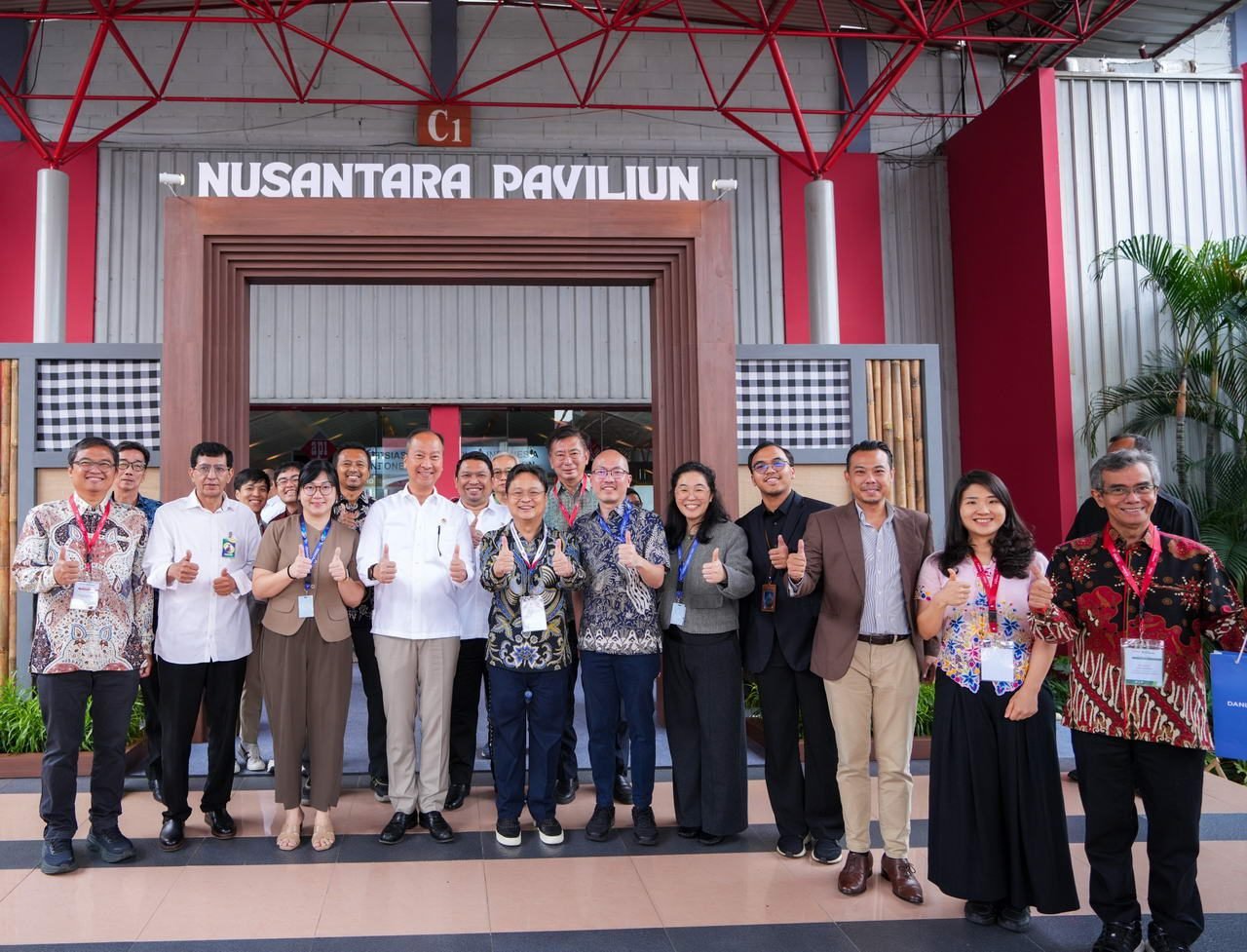
“The government will not leave the TPT sector, which is facing various challenges, to go it alone. Together with the business community, we are committed to finding solutions to the problems on the ground,” Minister of Industry Agus Gumiwang Kartasasmita said during a working visit to the Inatex – Indo Intertex 2025 exhibition in Jakarta on Thursday (17/4).
To sustain and accelerate the growth of the TPT industry, the Minister of Industry stressed that the government is there to support the business community. Various incentives and pro-industry policies have been prepared, from financing facilitation and industrial HR training to stronger import supervision and policies to control foreign products.
“Indonesia's domestic market is very large, with a population of nearly 300 million and high demand for clothing. Protecting the local TPT industry therefore means protecting the millions of workers in it. The government has also provided incentive programs for the TPT industry because it is labor-intensive,” he explained.
The TPT industry is one of the key sectors because it is labor-intensive and export-oriented. The sector continues to be developed over the long term in line with Government Regulation Number 14 of 2015 on the National Industrial Development Master Plan, the 2020–2024 National Industrial Policy, and the Making Indonesia 4.0 roadmap.
During the visit, the Minister of Industry spoke directly with textile and garment industry players. A number of suggestions and complaints were raised, especially about the flood of imported finished clothing, which is seen as increasingly squeezing the competitiveness of local products.
Most of these imported products come from countries whose exports have been held back by the tariff war between the United States and China, and are therefore diverted to developing country markets such as Indonesia. This practice is made worse by suspected transshipment, namely changing the country of origin of goods to avoid import duties.
In response, the Minister of Industry stressed that such import practices are unhealthy, including transshipment, and require strict supervision and firm enforcement. As a concrete step, Kemenperin is pushing for tighter procedures for issuing Certificates of Origin (SKA/COO), especially those issued by regional governments, to prevent misuse of origin documents that could harm domestic industry.
The Minister of Industry also spoke of the important role of the TPT industry in the national economy. “Of course I hope the textile industry, which plays an important role in the economy, especially in exports and employment, can survive amid global uncertainty, and we even hope it can grow positively. That way our foreign exchange reserves can increase through exports, and the demographic bonus can be channeled into productive sectors, including textiles and clothing,” he said.
Indonesia's TPT industry itself is showing positive performance. The Minister of Industry said the TPT industry is the fifth-largest contributor to the national manufacturing industry's export value. Throughout 2024, TPT exports reached USD 11.96 billion, accounting for 6.08 percent of total national manufacturing exports. Exports from the sector grew by 2.67 percent, while imports fell by 6.20 percent, producing a 20.99 percent increase in the trade balance.
“As of August 2024, the TPT industry employed 3.97 million workers, or 19.9 percent of the manufacturing industry's total workforce,” he said. In addition, the sector recorded GDP growth of 4.26 percent (c-to-c) in 2024 compared with the previous year.
This is further reinforced by investment data recording domestic investment (PMDN) of IDR 24.44 trillion and foreign investment (PMA) of USD 2.59 billion from 2019 to the third quarter of 2024, covering 18,493 projects. Although most investment has flowed into the textile industry, the apparel sector has been shown to absorb more workers.
Source: Press Release of the Ministry of Industry of the Republic of Indonesia