

The development of the fashion industry, especially small and medium-scale businesses, in various regions of Indonesia needs to keep being encouraged so that the potential of the national market can be filled and maximized by domestic businesses. The Ministry of Industry, through the Directorate General of Small, Medium and Miscellaneous Industries (Ditjen IKMA), consistently undertakes various strategic efforts to maintain the growth and sustainability of the national fashion industry.
These efforts include technical guidance, machinery and equipment facilitation, certification based on the Indonesian National Work Competency Standards (SKKNI), and the development of small and medium industry (SMI) centers through the Special Allocation Fund (DAK) scheme involving regional governments.
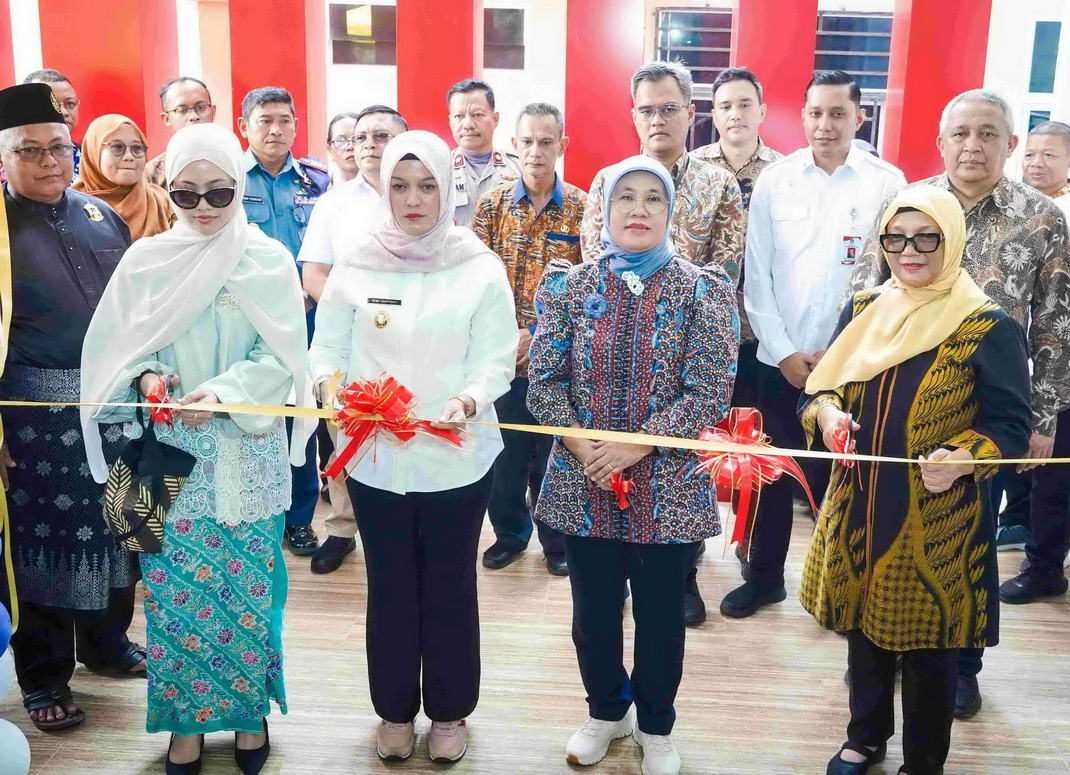
Minister of Industry Agus Gumiwang Kartasasmita said the inauguration of the Seri Kuala Lobam Fashion Industry Center in Bintan Regency, Riau Islands, is part of the government's strategy to strengthen the national fashion industry ecosystem based on regional potential.
In his view, developing SMI centers plays a strategic role in increasing the production capacity, product quality and competitiveness of small and medium industry players so that they can meet domestic and international market needs.
“We continue to encourage the strengthening of SMI centers as sustainable centers of industrial growth in the regions, as well as means to increase added value and create jobs,” the Minister of Industry said in a statement on Tuesday (27/1).
In line with this statement, the Director General of IKMA, Reni Yanita, explained that the Seri Kuala Lobam Fashion Industry Center will be a strategic production center capable of strengthening the competitiveness of Indonesian fashion SMIs. Reni also expressed appreciation for the synergy between Kemenperin, the Bintan Regency Government and the Riau Islands Provincial Government in developing the center.
“We are promoting this center as a shared production house as well as a vehicle for increasing the capacity of SMI players, from access to production facilities and technical training to strengthening business management,” Reni said at the inauguration of the Seri Kuala Lobam Fashion Industry Center in Bintan Regency on Wednesday (21/1).
The Director General of IKMA added that the fashion industry contributes significantly to economic activity and national economic growth. Kemenperin records around 590 thousand SMI apparel businesses employing 1.2 million people. “Developing SMI centers is therefore a concrete step to strengthen the sector's role in the national industrial structure,” she added.
Reni said budget support and facilities for developing the Seri Kuala Lobam Fashion Industry Center were provided through the physical DAK mechanism in the 2024 and 2025 fiscal years. Besides building physical infrastructure, the government also disbursed non-physical DAK in the 2025 fiscal year to support the institutional capacity development of the center's managers.
The Seri Kuala Lobam Fashion Industry Center has a number of competitive advantages, including modern production facilities equipped with machinery and equipment to support product quality standardization, a strategic location, and its position in the Kuala Lobam Free Trade Zone (FTZ), which offers zero percent export and import duties.
In addition, geographic proximity to main export destinations such as Malaysia, Singapore and the Philippines also supports logistics cost efficiency. “These advantages are expected to be a catalyst for fashion SMI players in Bintan Regency to increase competitiveness and expand access to export markets,” she said.
The inauguration of the Seri Kuala Lobam Fashion Industry Center was also attended by the Deputy Regent of Bintan, Deby Maryanti, the Chair of the Bintan Regency Dekranasda, Fiven Sumanti, and local regional leaders. The Director of Chemical, Clothing and Craft SMIs at Ditjen IKMA, Budi Setiawan, said that although only just inaugurated, the center has already received a good performance rating of 4 out of 5 in Q4 2025 because it has been operating routinely.
“Going forward, we hope this center can be a link for SMI players to enter the supply chains of large industries in industrial estates, and encourage mutually beneficial and sustainable partnerships,” Budi concluded.
Source: Press Release of the Ministry of Industry of the Republic of Indonesia