
The Ministry of Industry continues to drive the performance of the textile and textile products (TPT) industry as a sector prioritized for development under the Making Indonesia 4.0 roadmap. Support from all stakeholders is therefore needed so the TPT industry performs even better, especially as a labor-intensive, export-oriented sector supporting the national economy.
The importance of cooperation in building an ecosystem that strengthens every industrial sector from upstream to downstream was answered when 150 representatives of TPT industry stakeholders gathered at the FOKUS BBT 2023 event recently to discuss global trends, challenges and opportunities for the national TPT industry.
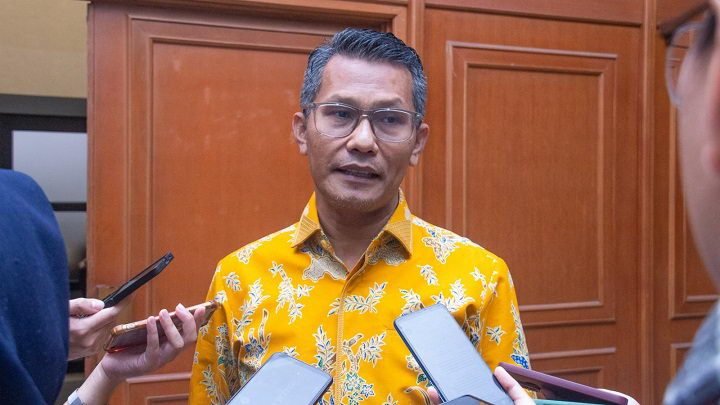
“Several issues were raised at the forum, including indicators for strengthening the competitiveness of the national TPT industry, namely mastery of advanced textile material technology as non-conventional textile raw materials,” the Head of the Agency for Industrial Standardization and Services Policy (BSKJI), Andi Rizaldi, said in Jakarta on Friday (27/10).
According to Andi, textile products developed from advanced materials have very specific functions and characteristics for particular needs, such as road infrastructure, architecture, automotive and smart apparel.
Under the Making Indonesia 4.0 roadmap, the TPT industry aims to make Indonesia one of the world's producers of functional textiles and smart apparel. “One form of TPT industry self-reliance is the ability to develop advanced textile materials and accelerate meeting the Domestic Component Level (TKDN) through import substitution of raw and auxiliary materials,” he explained.
Furthermore, advanced synthetic fiber-based textile materials developed by scientists, technocrats and academics need to be optimized so industry practitioners can implement them. “One BSKJI work unit in Bandung, BBSPJI Tekstil, has an advanced materials processing testbed facility. Of course this advanced technology can be used by various interested parties,” he added.
Another interesting issue discussed at FOKUS BBT 2023 was the circular economy agenda, agreed upon by countries worldwide in response to global challenges such as global warming and environmental damage from manufacturing, including the TPT industry. “A sustainable TPT industry is one that can implement a business model that harmoniously combines economic, social and environmental achievements. Implementing sustainable business models in the TPT industry is mandated by law, with reference to the policy of applying green industry principles,” Andi said.
Green industry policy in the TPT industry is therefore now implemented through Green Industry Standards for the Fabric Finishing and Fabric Printing Textile Industry and for the Weaving Textile Industry Using Power Looms. “We appreciate and continue to support TPT industries that have begun implementing this program,” he said.
Besides green industry standards, Kemenperin is also drafting a Minister of Industry Regulation on mandatory Technical Specifications (ST) for apparel, referring to four parameters in SNI 8101:201: yarn slippage resistance, seam strength of knitted seams, pH value and flammability.
“Mandatory application covers domestically produced and/or imported industrial goods and/or services marketed within the territory of the Unitary State of the Republic of Indonesia and/or industrial services whose activities are carried out within that territory,” said Sri Bimo Pratomo, Head of the Center for Formulation, Application and Enforcement of Industrial Standardization.
The next issue, the paradigm shift in the halal ecosystem, especially for consumer goods, has also opened discussion among TPT industry stakeholders. “Accelerating industry readiness must start with tracing from the upstream to the downstream sector. Collaboration and building a supply chain ecosystem that is traceable and free from contamination by non-halal substances are important, so businesses can easily apply for halal certification of consumer goods,” Andi added.
Meanwhile, the Head of BBSPJI Tekstil, Cahyadi, said industries producing consumer goods can easily access fabric raw materials that are traceable and free of animal-derived materials. Fabric producers need to understand the halal critical points in producing a piece of fabric.
“Cross-stakeholder cooperation is very important to build a complete supply chain ecosystem. In this regard, we at BBSPJI Tekstil also want to be part of that ecosystem, providing various solution-based industrial services for the national TPT industry,” he said.
This was reinforced by the signing of a Memorandum of Understanding between the Head of BBSPJI Tekstil and the Director of the Research Institute of Convergence Technology, Korea Institute of Industrial Technology (KITECH), South Korea, and several other TPT stakeholders. There was also a fashion show, a talk show, the presentation of mandatory SNI SPPT certificates and Green Industry Certificates, and awards for BBSPJI Tekstil customers.
Source: Press Release of the Ministry of Industry of the Republic of Indonesia