
The Ministry of Industry achieved a score of 83.03 in the 2024 Integrity Assessment Survey (SPI) conducted by the Corruption Eradication Commission (KPK), up 8.37 points from the previous year. Kemenperin is in the top 10, ranking 6th best among ministries.
In addition, Kemenperin is in the “TerJAGA” (well-maintained) category, showing that its SPI score is well above the average SPI score of all Ministries/Agencies/Regions, known as the National Integrity Index, which is still in the vulnerable category.
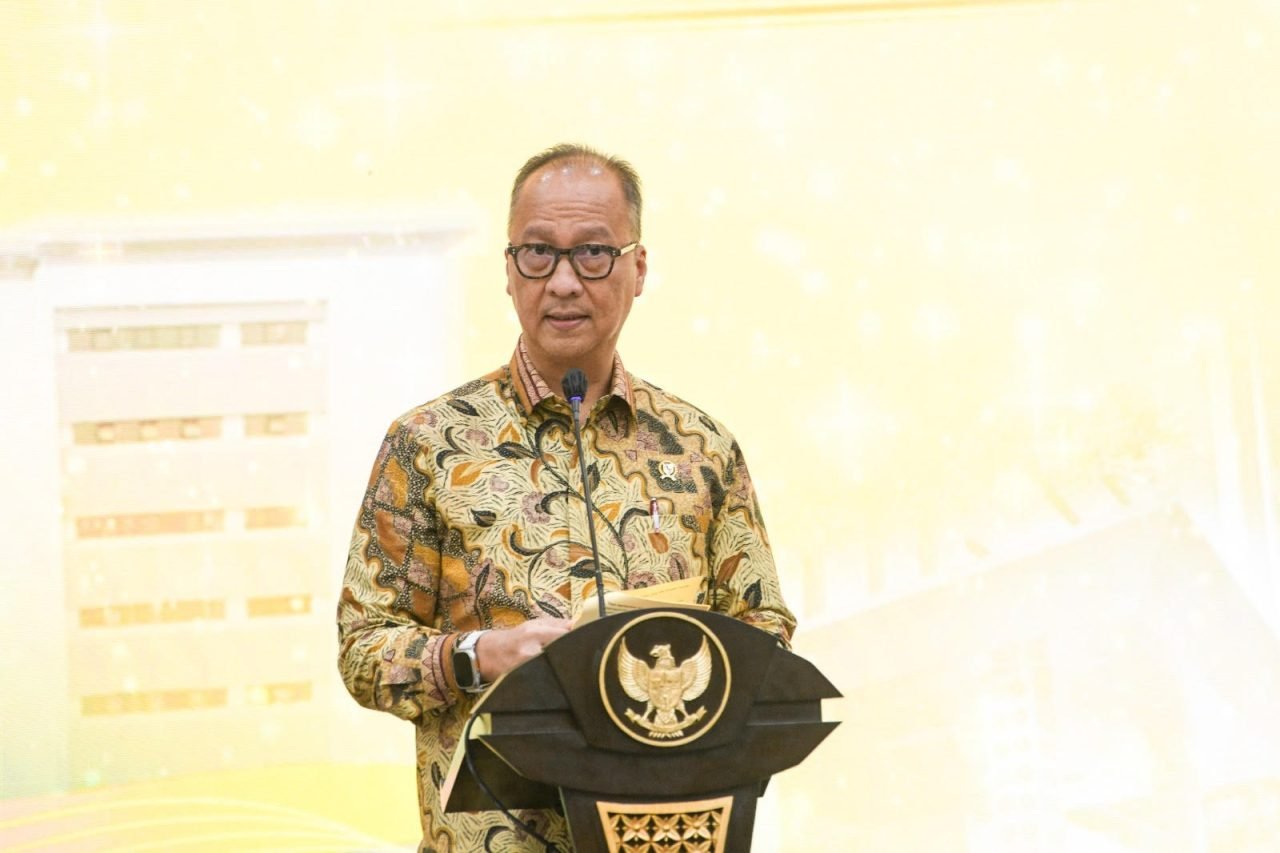
“The higher score and ranking reflect Kemenperin's efforts to improve public services to the community,” Minister of Industry Agus Gumiwang Kartasasmita said in an official statement in Jakarta on Friday (7/2).
The Minister of Industry added that the SPI score is based on measurement of several factors—internal, external and expert—so it reflects Kemenperin's integrity fairly objectively. The SPI is one component of the bureaucratic reform (RB) assessment, with a considerable weight of 10 points. This achievement therefore makes a large contribution to the Ministry of Industry's 2024 bureaucratic reform achievement.
To keep improving its SPI score, in line with efforts to achieve bureaucratic reform and more transparent and accountable public services, Kemenperin continues to make improvements. Steps taken include monitoring public service delivery and providing input for continuous improvement, identifying/mitigating the risk of potential corruption-prone areas and proactively applying preventive measures, and educating internal employees about the importance of anti-corruption values through Anti-Corruption Prevention and Gratification Handling Dissemination activities carried out by Kemenperin's Inspectorate General.
In 2024, Kemenperin again received an Unqualified Opinion (WTP) on its 2023 Financial Statements from the Audit Board of the Republic of Indonesia (BPK-RI). To date, Kemenperin has received a WTP Opinion 16 times in a row.
The Minister of Industry explained that Kemenperin does its best to follow up on BPK findings and recommendations on its financial statements every year. Accelerating the follow-up on BPK findings has also contributed to success in obtaining the WBK (Corruption-Free Zone) and WBBM (Clean and Serving Bureaucracy Zone) designations. As of 2023, 10 work units within Kemenperin had obtained both WBK and WBBM designations and 36 work units had obtained the WBK designation.
The Minister of Industry also continues to ask his staff to pay special attention to ensuring that the financial governance of the budget they manage applies the principles of effectiveness, efficiency, accountability and transparency.
“The higher SPI score and ranking reflect Kemenperin's efforts to increase the integrity of public services and be free of corruption. Going forward, Kemenperin is serious about maintaining and improving its SPI score and ranking amid the current budget efficiency measures,” the Minister of Industry said.
For information, the SPI is a survey conducted by the KPK to measure levels of integrity and corruption risk in Ministries, Agencies and Regional Governments (K/L/PD). The survey involves government employees, members of the public who use services, and experts skilled in evaluating the performance of government agencies.
The aims of the SPI are to measure levels of integrity and corruption risk in K/L/PD, increase public awareness and participation in corruption prevention, and provide a comprehensive picture of integrity levels and potential corruption risks.
“The SPI result is one of the indicators in the Bureaucratic Reform (RB) index, with a weight of 10 points, making it the largest indicator in the RB index assessment compared with other indicators,” the Minister of Industry said.
The SPI also issues improvement recommendations for each K/L/PD to follow up in order to improve the government system and public services in Indonesia. In addition, the KPK's SPI is also an indicator of the BerAKHLAK bureaucratic culture with professional civil servants (ASN). “The SPI recommendations are expected to increase transparency and accountability, reduce corruption risk, improve the quality of public services, and provide improvement recommendations for K/L/PD,” Agus concluded.
In conducting SPI 2024, the KPK partnered with Statistics Indonesia (BPS) and the National Research and Innovation Agency (BRIN) to ensure the quality of the survey methodology. The survey also involved survey institutions, 40 state universities and 1 Islamic religious university conducting Computer-Assisted Personal Interviewing (CAPI) and qualitative research, as well as survey experts such as consultants, academics and CSOs.
Survey participants came from 641 agencies across Indonesia and two state-owned enterprises. A total of 843,017 respondents filled in the SPI questionnaire, of whom 601,453 were processed into the SPI index.
The processed questionnaires came from 390,754 internal respondents, namely civil servants (ASN) and non-ASN staff who had served for at least one year; 201,927 external respondents, namely service users from the public, businesses and vendors; and 8,772 experts and stakeholders, such as the BPK, BPKP, the Ombudsman, journalists and others.
Source: Press Release of the Ministry of Industry of the Republic of Indonesia