
The Ministry of Industry continues to encourage the application of industrial product standardization to give consumers certainty and quality assurance for the products industry makes. It is hoped this will increase the competitiveness of domestic industry in both domestic and global markets.
“We now have more than 5,300 Indonesian National Standards (SNI) in industry, covering various industrial sectors and product types,” Minister of Industry Agus Gumiwang Kartasasmita said in his virtual remarks on Monday (14/10).
Of these, 130 SNIs have been made mandatory by Kemenperin, mainly for products with a major impact on safety, security, health and the environment.
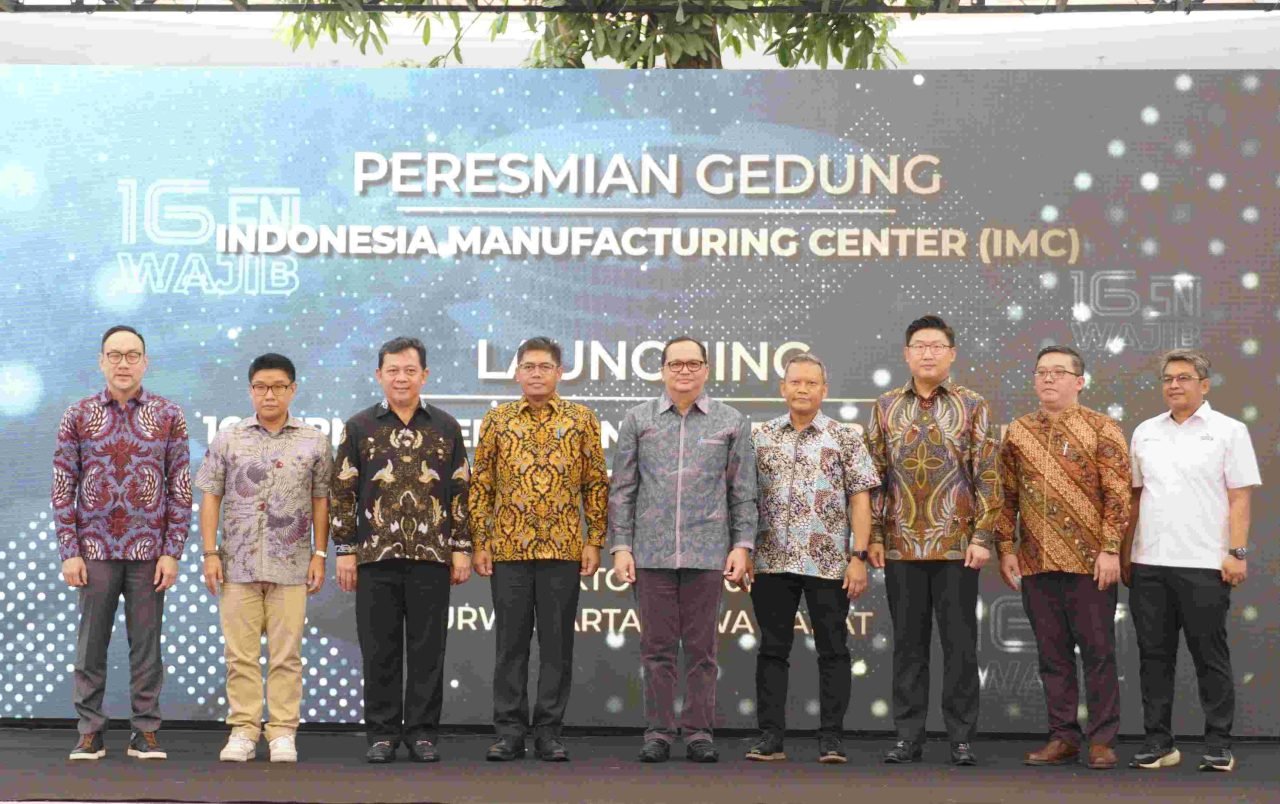
On this occasion, the Minister launched 16 Minister of Industry Regulations (Permenperin) on Mandatory Industrial Standardization. These 16 regulations govern the conformity assessment process, including proper and correct audits and testing.
“This is an important instrument for ensuring that products made by industry meet the set standards,” the Minister explained. The regulations also stipulate that certification and approval for use of the SNI mark are carried out through SIINas, making the process efficient and transparent and encouraging regulatory compliance.
To support implementation of the 16 regulations, Kemenperin has appointed Conformity Assessment Bodies (LPK), consisting of 20 Product Certification Bodies (LSPro) and 28 Testing Laboratories ready to certify and test products. These bodies play an important role in ensuring that products on the market meet applicable standards and in giving consumers quality assurance.
“Kemenperin also continues to encourage capacity building for these institutions so they can perform their functions optimally in supporting mandatory SNI in industry,” he added.
The Head of the Agency for Industrial Standardization and Services Policy (BSKJI), Andi Rizaldi, said the 16 new regulations cover various industrial products, including prestressed steel wire, calcium carbide, valves, stoves, LPG gas stove hoses, ceramic tiles, knapsack sprayers, safety shoes, sodium tripolyphosphate, aluminum sulfate, zinc oxide and cement.
“So far, 44 draft regulations have been harmonized: 16 have been issued and 28 are in the process of being issued. Another 24 drafts are still under discussion with stakeholders, all referring to the provisions of Minister of Industry Regulation No. 45 of 2022,” he explained.
Andi added that, as part of efforts to improve the quality and competitiveness of industrial products in national and global markets, several new provisions have been set in the regulations on Mandatory Industrial Standardization, in accordance with Minister of Industry Regulation No. 45 of 2022.
“This is to increase compliance with industrial standardization by all stakeholders,” he said.
One of the new provisions requires overseas manufacturers to have an Official Representative in Indonesia, who will be fully responsible for the products made by the overseas manufacturer.
In addition, imported products must first enter the official representative's warehouse located at the same site as the official representative. This provision aims to make supervision easier before products circulate in Indonesia.
“Another new provision is that the standardization certification process for industrial products is carried out in two stages,” Andi said.
The first stage is SNI or Conformity Certification, and the second is Approval for Use of the SNI/Conformity Mark. “The SNI/Conformity certification stage is carried out by Product Certification Bodies appointed by Kemenperin, while the Approval for Use of the SNI/Conformity Mark stage is carried out by Kemenperin,” he explained.
Both stages are carried out through the National Industrial Information System (SIINas) application. Using SIINas will make the process more effective, efficient and transparent and encourage regulatory compliance.
According to Andi, all these steps
are efforts to build a strong standardization ecosystem so that industry can be more competitive in domestic and global markets, improve product quality and encourage innovation and efficiency, ultimately increasing industrial competitiveness.
“Since these newly issued regulations must be implemented immediately, dissemination will be held for all stakeholders,” he concluded.
Source: Press Release of the Ministry of Industry of the Republic of Indonesia