

The government believes the local fashion and craft industry has bright prospects, in line with how Small and Medium Industry (SMI) players in the sector view the current business climate. Given its highly strategic role in Indonesia's economy, the Ministry of Industry has taken important steps to support the transformation of creativity-based industry.
Minister of Industry Agus Gumiwang Kartasasmita explained that, to realize optimism about the growth of fashion and craft small and medium industries (SMIs), Kemenperin runs various fashion and craft SMI development programs through the Bali Creative Industry Center (BCIC), now the Fashion and Craft Industry Empowerment Center (BPIFK).
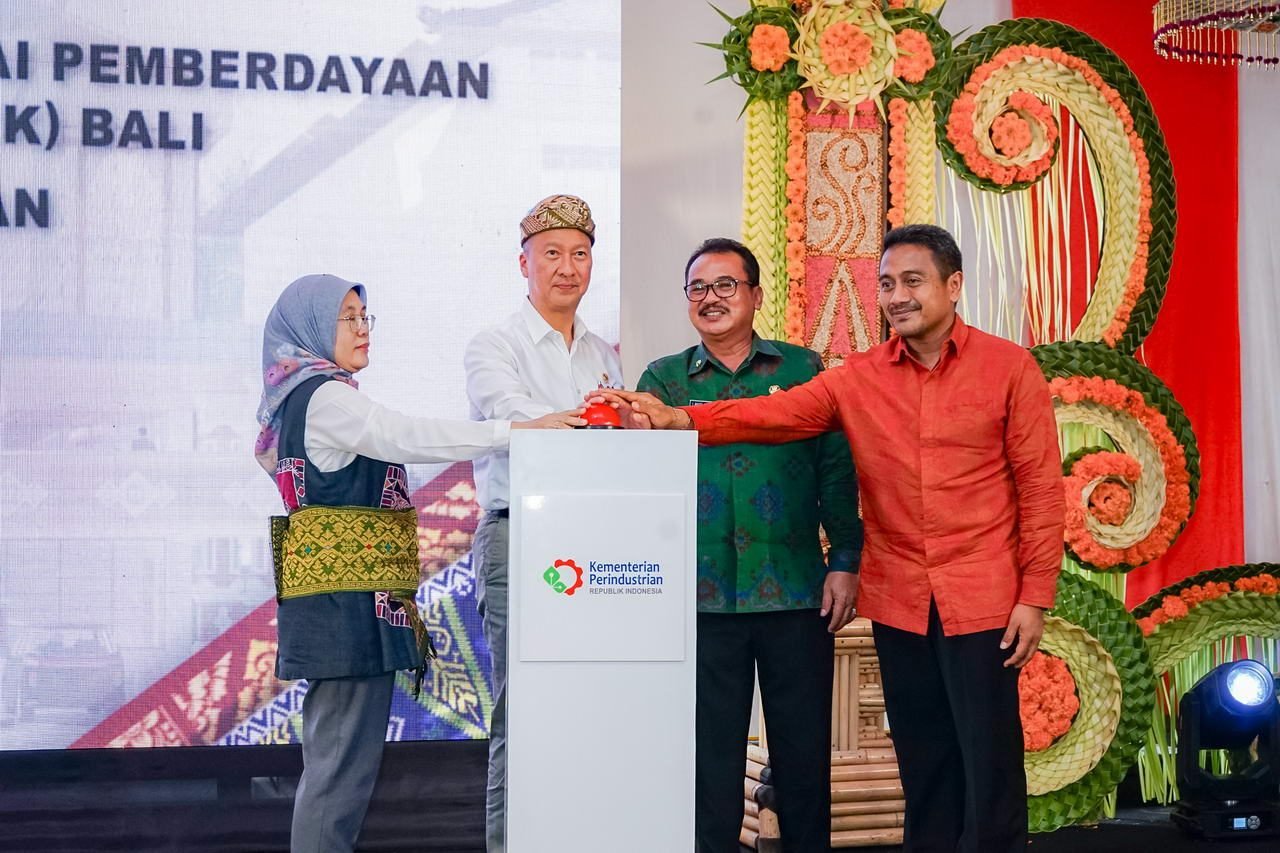
The Minister hopes BPIFK can be both a catalyst and an accelerator in developing fashion and craft SMIs nationally. “So that fashion and craft SMI players can produce better product designs that take into account sustainability, service, safety, quality, cost, delivery, morale, productivity, and environment,” the Minister said at the Ground Breaking of the BPIFK Office Building in Bali on Friday (13/12).
To improve BPIFK's performance in developing the potential of national fashion and craft SMIs, the Ministry of Industry is building a new BPIFK building in Kuta, Badung Regency, Bali. The Minister hopes the new office building and BPIFK facilities will deliver optimal benefits for the performance of all staff and the craft and fashion SMI ecosystem.
“We hope the new BPIFK office building will deliver optimal benefits by creating a healthy work environment, a friendly co-working space and comfortable workshops that support creativity and innovation in developing fashion and craft products and businesses,” Agus said.
Moreover, amid ever tighter global competition, industry players need to keep exploring and seizing opportunities, including in the halal industry, namely Muslim fashion products. “I want BPIFK to maximize its role as an attractive showcase for marketing flagship products of Indonesian SMIs, especially to global markets,” the Minister said.
The Director General of Small, Medium and Miscellaneous Industries, Reni Yanita, believes the new BPIFK building will support BPIFK's duties and functions in increasing the innovation and creativity of fashion and craft products so they can compete in national and international markets. “BPIFK therefore needs to stand on its own to support this strategic role,” the Director General of IKMA said.
The Director General of IKMA said BPIFK grew out of BCIC programs such as the Creative Business Incubator, the IFCA Design Competition and Center Product Design Development through the Design Lab, as a form of Ditjen IKMA's commitment to developing the fashion and craft creative industries. According to Reni, BPIFK's history is inseparable from Indonesia's great creative economy potential.
According to the Creative Economy Census, the creative economy's added value in 2010 was IDR 526.96 trillion. By 2023, it had grown to IDR 1,414.8 trillion, with three dominant subsectors: culinary, fashion and crafts. “This proves that the fashion and craft subsectors have considerable potential for further growth,” Reni said.
In 2022, Ditjen IKMA therefore proposed establishing BPIFK as an institution to the Ministry of State Apparatus Empowerment and Bureaucratic Reform. In the same year, the Bali Provincial Government issued a Letter of Support for establishing BPIFK in Bali. Last year, the Ministry of PAN & RB issued approval for establishing the BPIFK UPT within Ditjen IKMA. “BPIFK's organization and working procedures are regulated by Minister of Industry Regulation Number 2 of 2024 on the Organization and Working Procedures of UPTs within Ditjen IKMA,” Reni explained.
BPIFK will serve as a platform for fashion and craft SMI players to strengthen the entrepreneurship ecosystem in Indonesia through the aspects of create, connect, and catalyze. In the create aspect, BPIFK is expected to be a creative hub where fashion and craft SMI players can learn or hone their soft skills and hard skills. In the connect aspect, BPIFK is a creative hub that connects various stakeholders with the information fashion and craft SMI players need to run and grow their businesses.
“BPIFK can provide information on design trends, market trends, raw material suppliers, market access and access to financing. In the catalyze aspect, BPIFK functions as an accelerator, a booster for the growth and development of fashion and craft SMI businesses so they can move up a class, including by facilitating business matching and investor meetings,” Reni explained.
As of December 2024, BPIFK's creative business incubator program had mentored 325 fashion and craft entrepreneurs across more than 29 provinces and more than 70 regencies/cities in Indonesia. Of these, more than 20 SMIs have successfully increased sales, production capacity and employment. These SMIs include Seminyak Leather from Badung Regency, The A Castor from Gianyar Regency, Tenun Tinizhop from Klungkung Regency, Enigma Art Textile from Denpasar City and Suwari Loka from Tabanan Regency.
“BPIFK has also held a series of business model canvas workshops and creative product-making workshops in five regencies/cities in Bali Province, attended by more than 200 SMI players,” the Director General of IKMA said.
The Director General of IKMA therefore said this is the right time to build the new BPIFK building so its programs and activities can run more smoothly. Besides offices, the new BPIFK building, with a total floor area of about 3,820 square meters, will include fashion and craft workshop facilities and a dormitory. Construction is planned under a multi-year contract with an estimated work period of about 13 months.
The building follows a green building concept with a design rooted in local wisdom, in line with the Ministry of Industry's ongoing message of championing green industry while increasing the use of domestic products. The green building concept is reflected in the use of solar energy through solar panels as one of the energy sources for lighting in the office area.
The Director General of IKMA stressed that the Ministry of Industry is certainly committed to using domestic products in building BPIFK. Several small industry products used in the work are local products certified with TKDN for Small Industry, such as paving blocks, statues, the typical Balinese roof ornament kut celedu and Kamasan (wayang-style) paintings. “We appreciate that this construction absorbs 96.93% Domestic Products (PDN), with the total TKDN value of the project reaching 58.36%,” Reni said.
Source: Press Release of the Ministry of Industry of the Republic of Indonesia