

The textile and textile products industry (ITPT) is one of the leading sectors of national manufacturing because it has been a major foreign exchange earner and employer. After coming under pressure in 2023, the TPT industry rebounded in early 2024 with positive GDP growth.
“In Q1-2024, the TPT industry began to show significant improvement, with GDP growing 2.64 percent YoY and rising 5.92 percent quarter-on-quarter compared with Q4-2023, which contracted -1.15 percent,” the Acting Director General of Chemical, Pharmaceutical and Textile Industries (IKFT) at the Ministry of Industry, Taufiek Bawazier, said at the export release of PT Mahugi Jaya Sejahtera in Padalarang, West Bandung Regency, on Tuesday (21/5).
The TPT industry's strong performance is also reflected in its Q1-2024 exports, which rose 0.19 percent to USD 2.95 billion. “This is despite export markets still being affected by global economic uncertainty due to several conflicts between countries. Meanwhile, investment in the TPT sector also increased. Foreign investment (PMA) rose by 70.2 percent, to USD 194.3 billion,” Taufiek said.
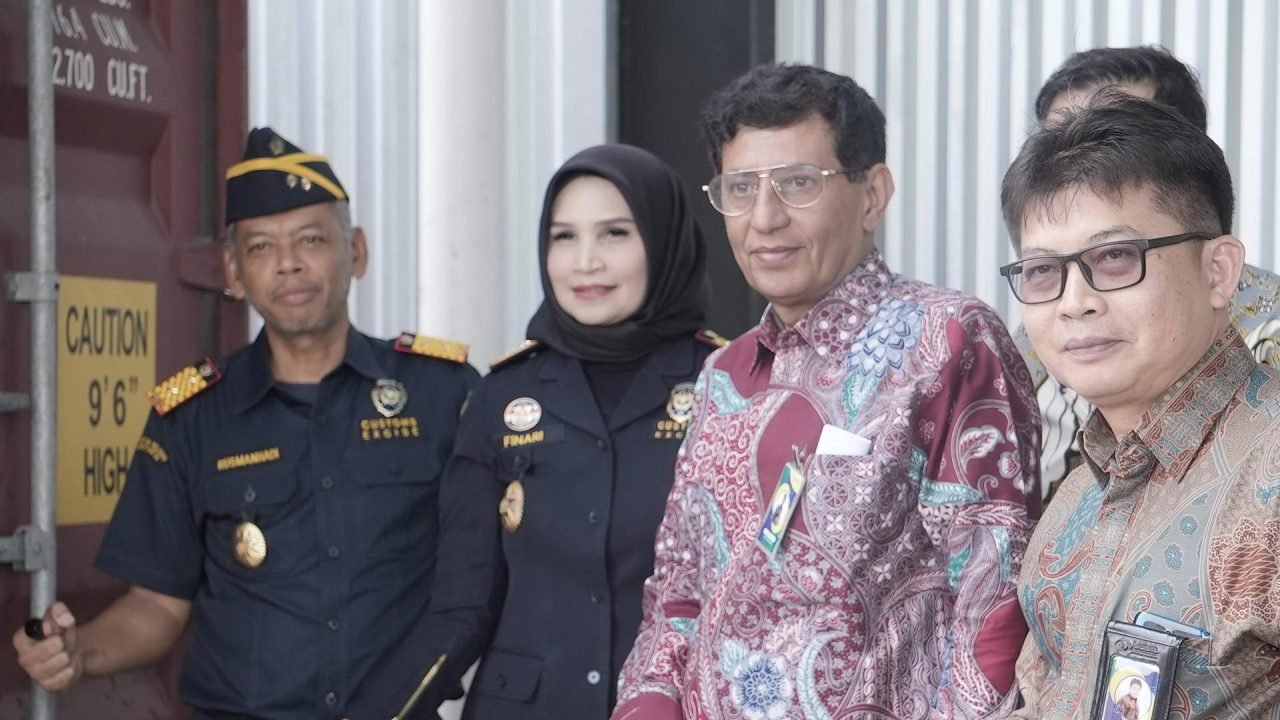
Kemenperin also praised PT Mahugi Jaya Sejahtera for tapping the markets of Dubai and other Middle Eastern countries, marked by the export release of 300,000 meters of fabric in three containers worth USD 350,000. “This marks the company's commitment to annual exports of 5 million meters, which will keep increasing as it opens non-traditional markets, besides Indonesia's main export markets such as Europe, America and Japan,” Taufiek said.
According to him, the garment and textile market in Middle Eastern countries will keep growing significantly over the next five years at an annual rate of 7 percent, with the fashion market estimated at USD 89 billion. “The United Arab Emirates (UAE) and Saudi Arabia account for almost half of the Middle East fashion market, and Qatar's consumption keeps rising,” Taufiek said.
Kemenperin notes that Indonesia exports textiles and clothing to Middle Eastern countries worth about USD 753 million, around 5.4 percent of total national TPT exports, meaning a market share of only 1.5 percent. “Efforts to increase exports to the Middle East are therefore an important step,” he said.
To boost national TPT exports, Kemenperin has prepared effective measures, including a machinery or equipment restructuring program for the fabric finishing and fabric printing industries under Minister of Industry Regulation Number 18 of 2021. In 2024, Kemenperin allocated IDR 50 billion for the program, targeting 59 companies.
It is also accelerating the implementation of Industry 4.0 by using key technologies to win global competition, such as artificial intelligence, novel fabrics, the Internet of Things (IoT), rapid data analysis for quick adaptation, mobile commerce, virtual and augmented reality (VR), online vector editors, 3D printing, blockchain and sustainability.
“We are also improving HR competence through vocational education that is linked and matched with industry. It is also necessary to guarantee easy access to raw materials for export-oriented industry,” the Director of Textile, Leather and Footwear Industries at Kemenperin, Adie Rochmanto Pandiangan, explained.
The Operations Director of PT Mahugi Jaya Sejahtera, Charles Senjaya, thanked Kemenperin for its support through the machinery restructuring program, which has enabled the company to increase production capacity and explore international markets.
“This improvement in quality has also given our customers the confidence to place orders with us regularly and steadily, and we will keep innovating in diversifying products for export markets to balance our local sales,” he said.
PT Mahugi Jaya Sejahtera is determined to expand its export markets more massively, not only to the Middle East but also for global brands. “The goods we export use entirely domestically produced raw materials,” he added.
The company is not forgetting the large domestic market. “We also plan to expand capacity and are working with other domestic textile industries, especially raw material suppliers, so that Muslim fashion marketed at home can be produced and made in the country,” Charles concluded.
Source: Press Release of the Ministry of Industry of the Republic of Indonesia