

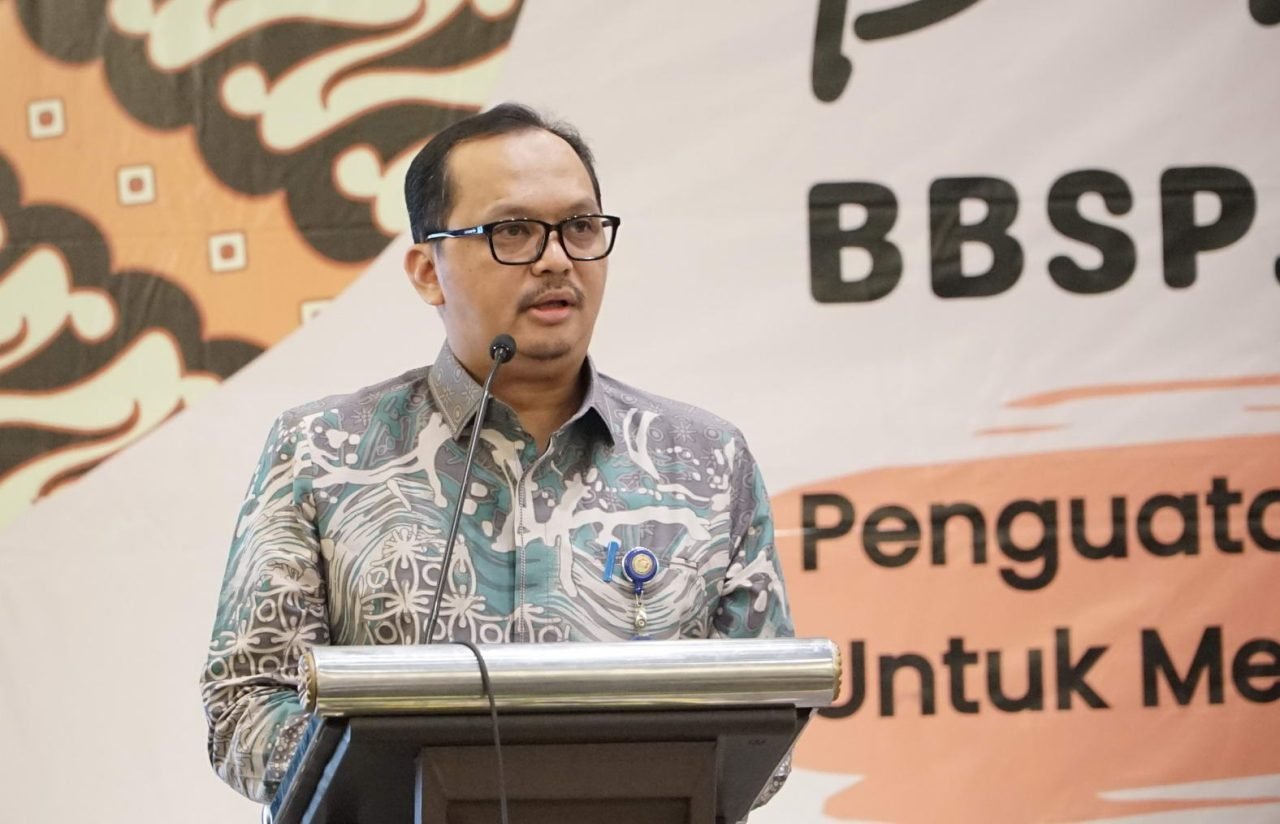
As a cultural heritage, batik must continue to be preserved while its patterns and motifs are developed in line with the times. This was conveyed by the Governor of the Special Region of Yogyakarta (DIY), Sri Sultan Hamengku Buwono X, at the main event of the 2024 National Batik Day (HBN) commemoration at Prambanan Temple some time ago.
The Governor of DIY praised the event, organized by the Center for Standardization and Industrial Services for Crafts and Batik (BBSPJIKB), a work unit under the Agency for Industrial Standardization and Services Policy (BSKJI) of the Ministry of Industry.
Sri Sultan supported efforts toward progressive and sustainable revitalization of the batik industry through the planned series of activities. “A comprehensive revitalization approach must be able to recognize and harness the potential of its surroundings, in terms of history, meaning, uniqueness and image,” he explained.
According to Sri Sultan, revitalization is not something oriented only toward physical beauty, but must reach down to substantial roots, complemented by a distinctive local cultural image. “An important aspect of revitalization is the need for cross-sectoral, multidimensional, multidisciplinary and sustainable efforts,” he added.
On revitalizing the batik industry, the Director General of Small, Medium and Miscellaneous Industries (IKMA), Reni Yanita, stressed the importance of collaborating with various stakeholders. “Collaboration between businesses, jointly maximizing their strengths, will lead to more efficient and effective achievement of business goals,” Reni said in a statement in Jakarta on Monday (28/10).
According to her, collaboration can involve raw material suppliers, distributors, the government, academics, designers, SMI centers and other batik industries. In terms of potential, there are currently 201 batik industry centers across 11 provinces.
The DIY Province alone has 23 batik industry centers. These centers can serve as raw material suppliers, distributors, product development partners and communal production sites for batik SMIs.
Meanwhile, the Head of BSKJI at Kemenperin, Andi Rizaldi, said batik is not just a beautifully patterned fabric, but also a symbol of national identity that contributes to Indonesia. “Batik has become an increasingly important industrial subsector internationally, with national batik exports exceeding USD 17.5 million in 2023,” he said.
The Head of BSKJI said that, to increase the efficiency and preservation of the craft and batik industries, BBSPJIKB Yogyakarta has prepared several apps and books launched at the 2024 HBN commemoration.
“The apps include the Batik and Craft Ecosystem, Syndi – Synthetical Dyes Indexation, and Digital Batik Motifs. BBSPJIKB will also send the books Batik Lintas Nusa and Ragam Motif Kerajinan Nusantara to 2,000 batik industry players across the archipelago,” Andi said.
The apps and books for developing the batik industry were launched by lighting the Geni Pangudi from the Cawan Sidomukti, symbolizing the hope that the batik and craft industry community can benefit as much as possible from BBSPJIKB Yogyakarta.
The Head of BBSPJIKB Yogyakarta, Budi Setiawan, said the theme of the main event of the 2024 HBN commemoration was “Tradition and Innovation in Harmony”. “The noble traditions of Indonesian batik culture are conceptualized in various relevant innovations, creating harmony at the micro and small level of the national batik industry,” Budi said.
Source: Press Release of the Ministry of Industry of the Republic of Indonesia